Trailer chassis load capacity is one of the most important considerations when designing or selecting a trailer chassis for an OEM project.
However, chassis load capacity is not determined by a single component or a single steel specification. The overall capacity of a trailer depends on the chassis structure, trailer weight, payload, axle and suspension capacity, weight distribution, drawbar design, mounting points and the intended application.
For OEM trailer manufacturers, understanding these factors early in the design process can help avoid structural problems, overloaded components and costly design changes.
This guide explains the key factors that influence trailer chassis load capacity and what OEM buyers should provide when requesting a custom trailer chassis.
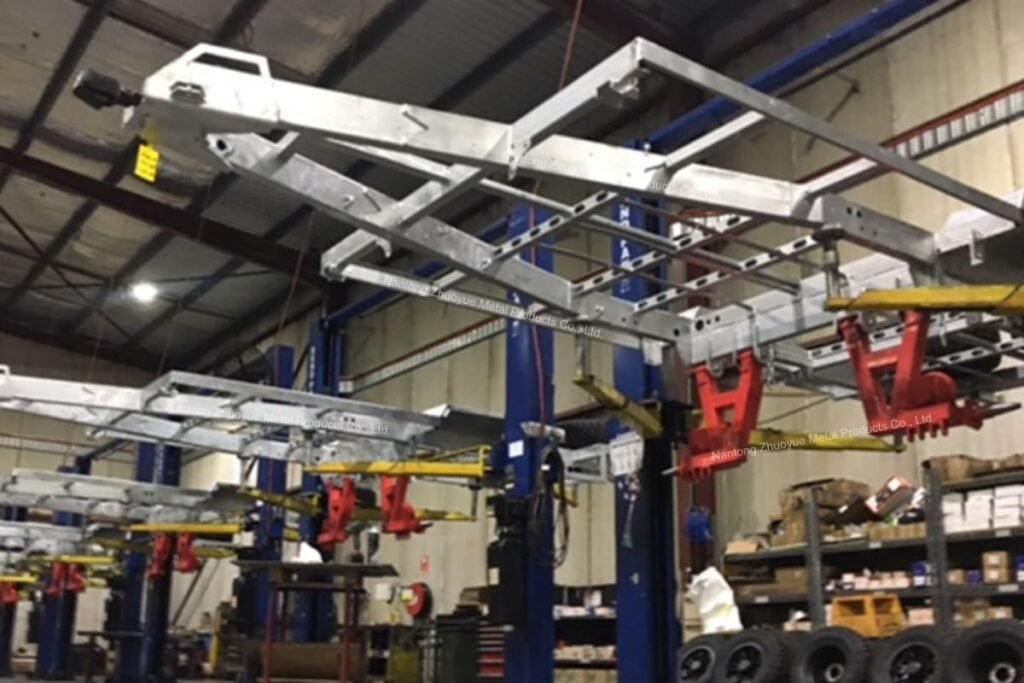
What Does Trailer Chassis Load Capacity Mean?
Trailer chassis load capacity generally refers to the amount of load that a trailer chassis structure is designed to support under specified conditions.
It is important to distinguish chassis load capacity from payload capacity.
A trailer has its own empty or tare weight. When cargo, equipment, a camper body or other components are added, the total trailer weight increases.
A simplified relationship is:
Payload = Gross Trailer Weight − Tare Weight
However, the actual allowable payload is also limited by other components and applicable requirements, including axle capacity, suspension capacity, tyres, wheels, coupler, drawbar and the overall trailer rating.
Therefore, a chassis should not be evaluated by its frame structure alone.
Trailer Chassis Load Capacity vs. Payload Capacity
These terms are sometimes used interchangeably, but they describe different aspects of trailer design.
| Term | Meaning |
|---|---|
| Tare Weight | Weight of the empty trailer in the specified configuration |
| Payload | Additional load the trailer is designed to carry |
| Gross Trailer Weight | Total weight of the trailer and its load |
| Chassis Capacity | Structural capacity of the chassis under defined design conditions |
| Axle Capacity | Load rating of the axle or axle system |
| Suspension Capacity | Capacity of the suspension components |
| Coupler Capacity | Rated capacity of the coupling system |
For example, a trailer may have a strong steel chassis, but its practical load capacity can still be limited by the axle, suspension, tyres or coupling system.
This is why OEM trailer projects should evaluate the complete trailer system rather than selecting a chassis based only on its frame dimensions.
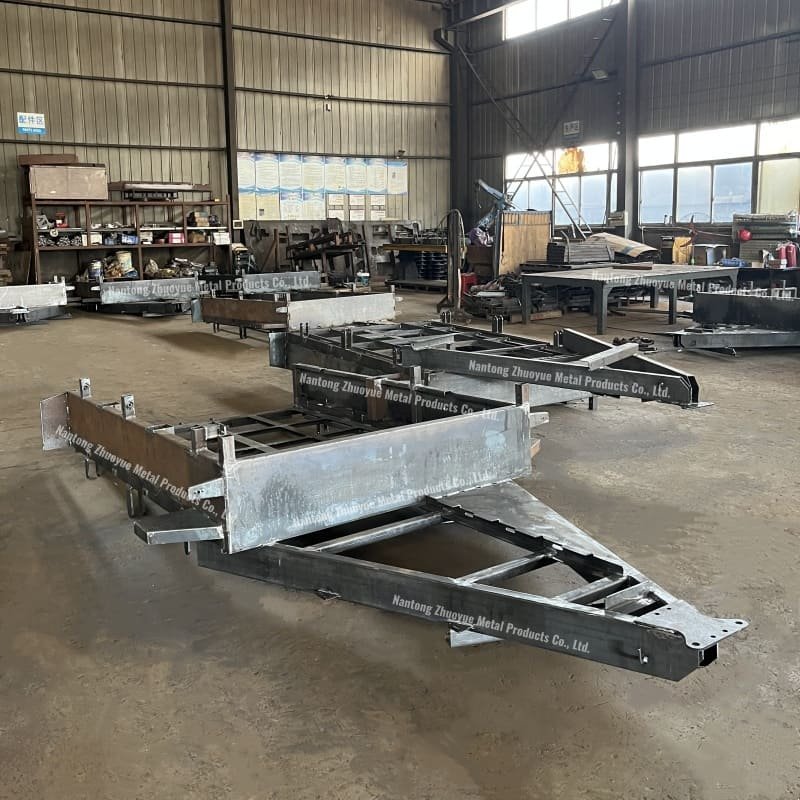
Key Factors That Affect Trailer Chassis Load Capacity
1. Chassis Design and Structural Geometry
The basic geometry of the chassis has a major influence on its structural performance.
Important design elements can include:
- Main longitudinal frame rails
- Crossmembers
- Drawbar or A-frame
- Suspension mounting areas
- Axle mounting points
- Body mounting points
- Reinforcement plates
- Brackets and support structures
- Load-bearing interfaces
The arrangement and connection of these components can be just as important as the material thickness.
A well-designed chassis distributes loads through the structure rather than concentrating them in isolated areas.
2. Frame Rail Dimensions and Section Design
The dimensions and section shape of the main frame members affect their ability to resist bending and other structural loads.
Depending on the application, an OEM chassis may use rectangular hollow sections, channels, formed sections or other structural profiles.
Simply increasing steel thickness is not always the most efficient way to increase structural capacity. The section size, geometry, span, crossmember arrangement and reinforcement strategy should all be considered together.
For custom trailer chassis, the structural design should therefore be based on the intended load and application rather than copied from a standard chassis without engineering review.
3. Crossmember Design
Crossmembers connect the main frame rails and help distribute loads across the chassis.
Their spacing, size, position and connection to the main rails can affect the overall stiffness of the chassis.
Crossmembers are particularly important when the trailer carries concentrated loads, such as equipment, tanks, machinery or heavy body structures.
The chassis should be designed according to where the actual load will be applied rather than assuming that the load is evenly distributed across the entire deck.
4. Payload and Trailer Weight
The required payload is one of the first pieces of information an OEM manufacturer should confirm.
For example, a trailer designed to carry a lightweight camper body will have different structural requirements from a trailer designed to transport construction equipment.
When determining the required chassis capacity, consider:
- Trailer body weight
- Equipment weight
- Batteries and electrical systems
- Water tanks
- Gas or fuel systems where applicable
- Spare wheel and accessories
- Cargo
- Passengers where applicable
- Other permanently installed components
The estimated weight of every major component should be included when calculating the target gross trailer weight.
5. Axle Capacity
The axle is one of the most important load-bearing components of a trailer.
Even if the chassis structure can support a certain load, the complete trailer cannot safely carry more than the limits of its other critical components.
Axle capacity should therefore be considered together with:
- Number of axles
- Axle rating
- Axle position
- Suspension configuration
- Wheel and tyre capacity
- Brake system
- Chassis structure
For OEM projects, axle capacity should be confirmed at the same time as chassis design rather than treated as a separate issue.
6. Suspension Capacity
Suspension components transfer loads between the chassis and the wheels.
Depending on the trailer design, the suspension may use leaf springs, independent suspension or other configurations.
The suspension type and capacity should match the intended trailer weight and operating conditions.
For example, a chassis intended for a heavier equipment trailer may require a different suspension arrangement from a lightweight camper trailer.
7. Weight Distribution
Total trailer weight is only part of the calculation.
Where the weight is located also matters.
A concentrated load near the rear of a trailer can produce a different structural and hitch load condition from the same weight positioned closer to the axle.
Important factors include:
- Cargo position
- Axle location
- Centre of gravity
- Drawbar load
- Distance between major support points
- Load distribution across crossmembers
For this reason, OEM buyers should provide information about the expected load location whenever possible.
8. Drawbar and Coupler Loads
The front section of the trailer chassis transfers loads through the drawbar or A-frame to the towing vehicle.
The drawbar therefore needs to be designed as part of the overall chassis structure.
The design should consider:
- Coupler type
- Coupler rating
- Drawbar dimensions
- Drawbar length
- A-frame geometry
- Welding and connection points
- Expected vertical and longitudinal loads
A strong main frame does not automatically mean that the drawbar is suitable for the required application.
9. Chassis Material
Material selection also affects chassis design.
Trailer chassis can be manufactured from different grades of structural steel depending on the application and customer requirements.
However, material grade alone does not determine the final load capacity.
Two chassis made from similar steel can have significantly different structural performance because of differences in:
- Section dimensions
- Material thickness
- Frame geometry
- Crossmember spacing
- Welding design
- Reinforcement
- Span
- Load distribution
For OEM projects, the material specification should therefore be considered together with the complete structural design.
10. Welding and Structural Connections
Welding connects the individual chassis components into a complete structural assembly.
The quality and design of welded connections can affect the overall integrity of the chassis.
Important considerations include:
- Joint design
- Weld size
- Weld location
- Welding sequence
- Distortion control
- Connection between crossmembers and main rails
- Reinforcement around high-load areas
For production chassis, welding should follow the approved engineering drawings and production specifications.
11. Trailer Application
The intended application is one of the most important factors in determining chassis requirements.
Camper Trailer Chassis
Camper trailers need to support the camper body, interior equipment, water systems, batteries, storage and user cargo.
The chassis should be designed around the actual body structure and expected loading conditions.
Tiny House Trailer Chassis
Tiny house trailers can carry relatively large and concentrated structural loads.
The chassis needs to account for the weight and mounting points of the complete tiny house structure, as well as the distribution of the load along the trailer.
Utility Trailer Chassis
Utility trailers may carry different types of cargo from one trip to another.
The chassis design should therefore consider the expected payload range and potential load distribution.
Flatbed and Equipment Trailers
Equipment trailers may carry concentrated loads such as machinery, vehicles or construction equipment.
The position of the load and the location of support points can be particularly important in these applications.
Specialized Equipment Trailers
Traffic management equipment, mobile surveillance systems, light towers and other specialized equipment can create unusual load distributions.
In these applications, the chassis should be designed around the actual equipment, mounting points and centre of gravity.
How to Determine the Required Trailer Chassis Capacity
OEM buyers can start with a basic load calculation.
Step 1: Determine the Target Payload
Define how much cargo or equipment the trailer needs to carry.
Step 2: Estimate the Tare Weight
Calculate the weight of the chassis, body, axle, suspension, wheels, electrical equipment and other permanently installed components.
Step 3: Determine the Target Gross Weight
Add the tare weight and required payload to establish the target gross trailer weight.
Step 4: Check Axle and Suspension Capacity
Make sure the axle, suspension, wheels and tyres are suitable for the target trailer weight.
Step 5: Review Weight Distribution
Determine where the major loads will be positioned and how they will affect axle loads and drawbar load.
Step 6: Review the Chassis Structure
The main frame, crossmembers, drawbar and mounting points should be reviewed against the intended loading conditions.
Step 7: Confirm Applicable Requirements
Depending on the destination market and trailer application, additional regulatory, engineering or certification requirements may apply.
These requirements should be confirmed for the specific trailer model and market rather than assumed to be the same for every project.
If you are still evaluating different chassis options, see our guide on how to choose the right trailer chassis for your application.
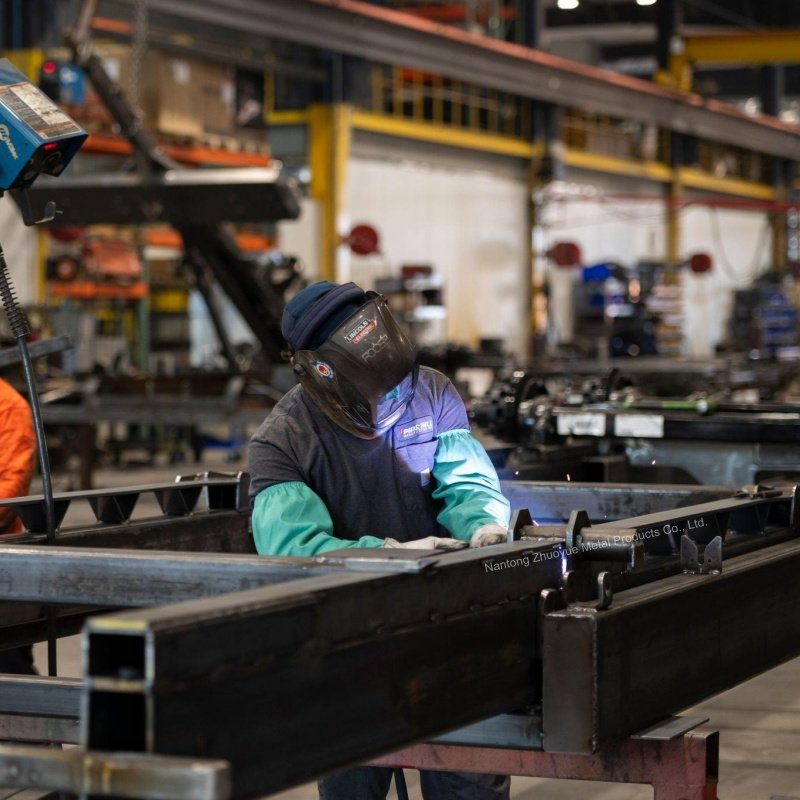
Why Custom Trailer Chassis Design Can Be Important
A standard chassis may work for a standard trailer configuration, but OEM products often have unique dimensions, body structures and equipment.
A custom trailer chassis can be designed around:
- Specific trailer dimensions
- Target payload
- Axle configuration
- Suspension type
- Body mounting points
- Equipment mounting points
- Centre of gravity
- Drawbar requirements
- Surface treatment
- Shipping requirements
This allows the chassis structure to be developed around the actual trailer rather than forcing the application into a standard design.
What OEM Buyers Should Provide to a Chassis Manufacturer
To evaluate a trailer chassis project accurately, provide as much information as possible.
Useful information includes:
- Overall trailer dimensions
- Target payload
- Estimated tare weight
- Target gross trailer weight
- Axle quantity and rating
- Suspension type
- Wheel and tyre specification
- Body or equipment weight
- Major load locations
- Centre of gravity, if available
- Drawbar or coupler requirements
- Mounting hole positions
- Chassis drawings or 3D files
- Material requirements
- Surface treatment requirements
- Annual production quantity
The more complete the initial information is, the easier it is for the manufacturer to review the structure and prepare an appropriate quotation.
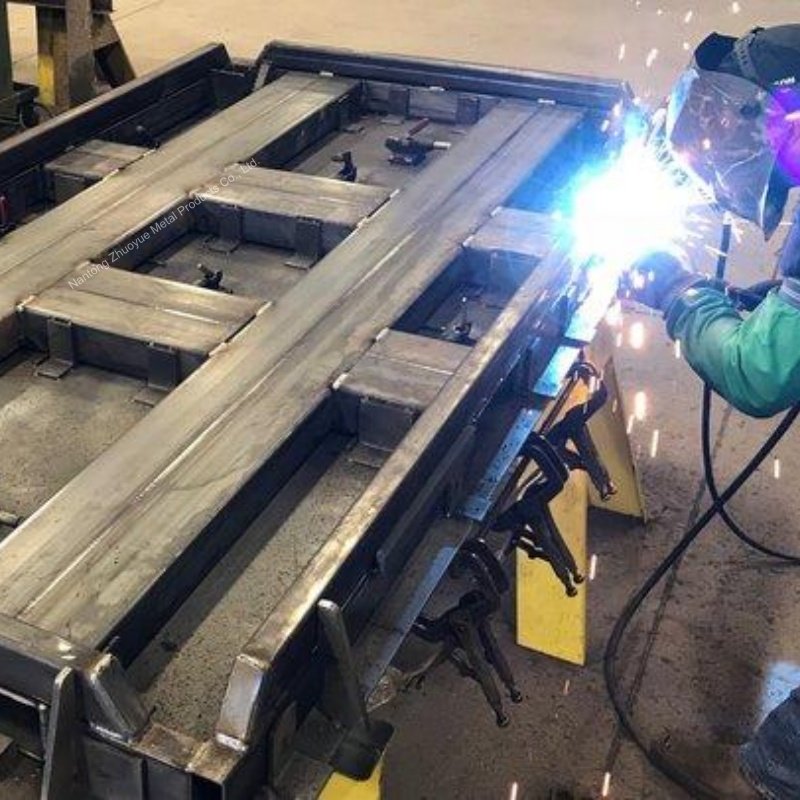
Trailer Chassis Load Capacity Should Be Evaluated as a System
Trailer chassis load capacity should not be determined by looking at one steel section or one component.
The complete system should be considered, including:
Chassis → Axle → Suspension → Wheels & Tyres → Coupler → Load Distribution
Each component needs to be suitable for the intended trailer configuration.
For OEM manufacturers, this system-level approach can help reduce the risk of designing a chassis that is structurally strong in one area but limited by another component.
OEM Trailer Chassis Manufacturing
At Zhuoyue Metal, we manufacture custom trailer chassis and frames for OEM trailer projects.
Our manufacturing capabilities include laser cutting, CNC bending, welding, surface treatment and assembly.
We can manufacture chassis according to customer drawings, dimensions, material requirements and application specifications for camper trailers, tiny house trailers, utility trailers, flatbed trailers and specialized trailer applications.
For projects requiring corrosion protection, surface treatment options can also be discussed according to the intended application and customer requirements.

Frequently Asked Questions
How is trailer chassis load capacity calculated?
Trailer chassis load capacity depends on the structural design, material, frame dimensions, crossmembers, load distribution and connections. The overall trailer capacity must also consider axle, suspension, wheels, tyres and coupling components.
Is trailer chassis capacity the same as payload capacity?
No. Chassis capacity refers to the structural capability of the chassis under defined conditions, while payload is the additional load the complete trailer is designed to carry. The actual allowable payload is also limited by other trailer components and applicable requirements.
Does thicker steel always mean a higher trailer chassis capacity?
Not necessarily. Steel thickness is only one factor. Frame geometry, section size, crossmember spacing, reinforcement, span, welding and load distribution also influence structural performance.
How does axle capacity affect trailer load capacity?
The complete trailer cannot safely carry more than the applicable limits of its critical load-bearing components. Axle capacity should therefore be considered together with the chassis, suspension, wheels, tyres and other relevant components.
Can a custom trailer chassis be designed for a specific payload?
Yes. A custom chassis can be developed around the target payload, trailer dimensions, axle configuration, suspension, load distribution, body structure and mounting requirements.
What information does a manufacturer need to design a trailer chassis?
Useful information includes trailer dimensions, payload, estimated tare weight, target gross weight, axle and suspension specifications, body or equipment weight, load locations, mounting points, material requirements and surface treatment.
Need a Custom Trailer Chassis for Your Required Load?
If you are developing a camper trailer, tiny house trailer, utility trailer, equipment trailer or specialized OEM trailer, the chassis should be designed around the complete trailer system and its intended loading conditions.
Send us your trailer drawings, dimensions, target payload, axle and suspension requirements, and application details. Our team can review the requirements and discuss a suitable custom trailer chassis solution.