How to Choose the Right Trailer Chassis for Your Application
Choosing the right trailer chassis is an important decision when developing a new trailer or sourcing an OEM chassis from a manufacturer.
The chassis is the structural foundation of the trailer. It needs to support the required payload, work with the selected axle and suspension system, fit the trailer body accurately, and withstand the forces generated during towing and operation.
However, there is no single trailer chassis that is suitable for every application.
A camper trailer, tiny house trailer, utility trailer and specialized equipment trailer can have very different structural and mounting requirements.
For OEM buyers, the right approach is to select the chassis based on the complete trailer application, rather than choosing a chassis based only on dimensions or load capacity.
This guide explains the key factors to consider when choosing a trailer chassis and what information you should provide to an OEM trailer chassis manufacturer.
1. Start With the Trailer Application
The first question to ask is:
What will the trailer be used for?
Different applications require different chassis configurations.
Common applications include:
- Camper trailers
- Tiny house trailers
- Utility trailers
- Box trailers
- Cage trailers
- Flatbed trailers
- Equipment trailers
- Specialized commercial trailers
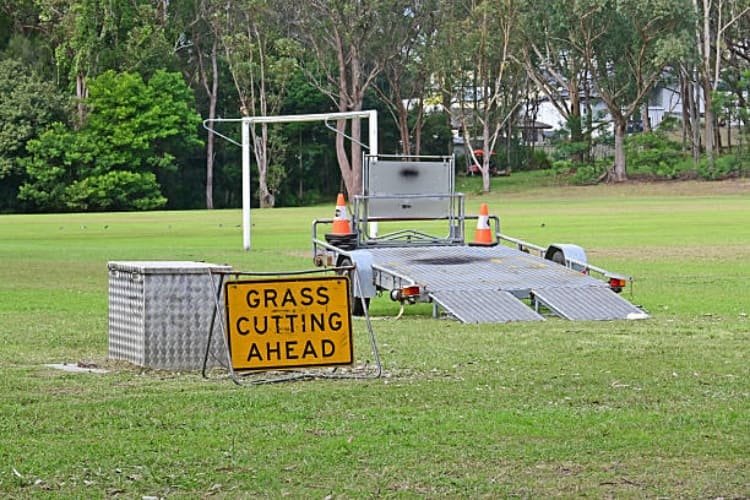
- Traffic management equipment trailers
The intended application affects the chassis dimensions, payload requirements, body mounting points, axle configuration and overall structural design.
For example, a camper trailer may require mounting points for a recreational body and storage equipment, while a flatbed trailer may require an open structural platform designed around distributed cargo.
A specialized equipment trailer may require additional reinforcement and mounting structures for the equipment installed above the chassis.
Therefore, the trailer application should be defined before finalizing the chassis design.
2. Determine the Required Trailer Dimensions
The chassis needs to match the dimensions of the finished trailer.
Important dimensions may include:
- Overall chassis length
- Overall chassis width
- Chassis height
- Drawbar length
- Body mounting dimensions
- Crossmember positions
- Axle position
- Ground clearance
For OEM projects, these dimensions should be based on the final trailer design whenever possible.
A chassis that is structurally suitable but does not match the body dimensions can create unnecessary engineering and assembly problems.
If the final trailer body has already been designed, provide the manufacturer with the relevant drawings or CAD files so that the chassis can be developed around the actual interfaces.
3. Calculate the Required Payload and Trailer Weight
Load capacity is one of the most important factors when selecting a trailer chassis.
However, OEM buyers should distinguish between several different weight values.
Tare Weight
The tare weight is the weight of the empty trailer or specified trailer configuration.
Payload
Payload is the additional load the trailer is designed to carry.
Gross Trailer Weight
Gross trailer weight refers to the total loaded weight of the trailer in the applicable design or regulatory context.
When selecting a chassis, the manufacturer needs to understand the expected weight of the complete trailer, not just the cargo.
For example, if the finished trailer body, equipment, batteries, tools and accessories add significant weight, these items need to be considered together with the intended payload.
A useful starting point for an OEM project is to provide:
Estimated trailer tare weight + required payload = target loaded trailer weight
The final engineering requirements should then be confirmed with the appropriate axle, suspension and chassis specifications.
For more information, see our guide to trailer chassis load capacity.
4. Consider Weight Distribution, Not Just Total Weight
Two trailers can have the same total weight but require different chassis configurations because their weight is distributed differently.
Important considerations include:
- Cargo position
- Body structure
- Equipment location
- Battery location
- Axle position
- Centre of gravity
- Drawbar load
- Front and rear overhang
For example, a trailer carrying heavy equipment concentrated toward the rear may require a different structural and axle arrangement from a trailer with evenly distributed cargo.
For OEM projects, weight distribution should therefore be considered during the chassis design stage rather than after fabrication.
5. Choose the Appropriate Axle Configuration
The chassis needs to be compatible with the intended axle configuration.
Common configurations include:
- Single axle
- Tandem axle
- Multiple axle configurations for specialized applications
The choice depends on the trailer’s required capacity, dimensions, weight distribution and application.
Axle position is also important because it affects trailer balance and load distribution.
When requesting a custom chassis, OEM buyers should provide the axle specification or clearly define the required axle capacity and configuration.
The chassis manufacturer can then confirm the corresponding mounting requirements.
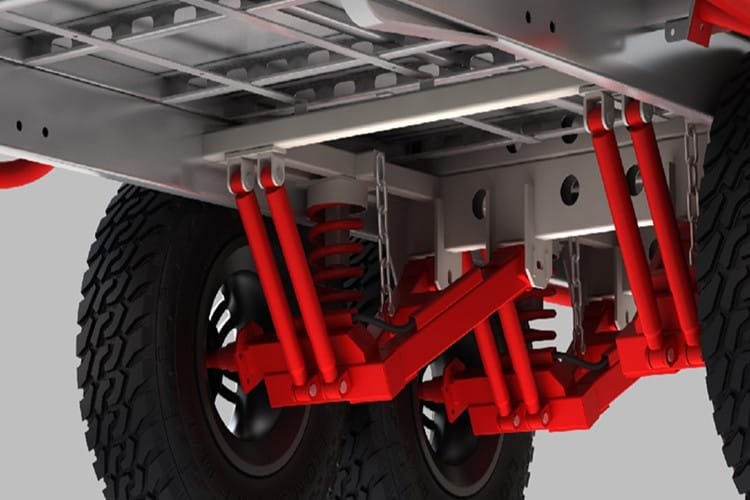
6. Select the Right Suspension System
The suspension system should be considered together with the chassis and axle configuration.
Depending on the trailer application, options may include:
- Leaf spring suspension
- Torsion suspension
- Independent suspension
- Other application-specific systems
The selected suspension affects the chassis mounting structure, available ground clearance and overall trailer configuration.
For OEM manufacturing, it is therefore better to confirm the suspension system before finalizing the chassis mounting points.
If you already have a preferred suspension supplier or suspension drawing, provide the relevant technical information to the chassis manufacturer.
7. Check the Coupler and Drawbar Requirements
The front section of the chassis must be compatible with the towing system.
This includes the:
- Drawbar or A-frame
- Coupler
- Safety chain mounting
- Jack or jockey wheel mounting
- Other towing-related components
The required drawbar length and configuration may also depend on the trailer body and intended application.
For custom OEM chassis, the coupler mounting interface should be confirmed before production.
8. Consider the Trailer Body and Mounting Interfaces
A chassis is not designed independently from the trailer body.
The body, floor, enclosure or equipment installed above the chassis needs appropriate mounting interfaces.
These may include:
- Mounting holes
- Brackets
- Floor supports
- Reinforcement points
- Side wall mounting
- Equipment mounting structures
For OEM buyers, it is especially important to confirm hole positions and mounting dimensions before the chassis enters production.
A small change in a mounting interface can affect the body assembly later.
9. Choose the Right Chassis for Different Trailer Applications
The appropriate chassis configuration varies significantly depending on the application.
Camper Trailer Chassis
A camper trailer chassis is designed to support a recreational body while accommodating the required suspension, storage systems and other equipment.
When selecting a camper trailer chassis, consider:
- Finished camper body weight
- Payload
- Body dimensions
- Axle configuration
- Suspension
- Storage and equipment locations
- Body mounting points
- Ground clearance
The chassis should be developed around the actual camper body whenever possible.
Tiny House Trailer Chassis
Tiny house trailers typically carry a relatively large structure compared with their chassis dimensions.
Important considerations include:
- Overall house dimensions
- Structural floor support
- Total loaded weight
- Weight distribution
- Axle location
- Drawbar configuration
- Floor and body mounting
- Required ground clearance
Because the body structure can be substantial, the chassis should be considered as part of the complete tiny house trailer design.
Utility Trailer Chassis
Utility trailers are commonly used for transporting equipment, tools, materials and recreational vehicles.
Depending on the application, the chassis may support:
- Open decks
- Side panels
- Cage structures
- Toolboxes
- Equipment
Payload, dimensions and loading method are particularly important when selecting a utility trailer chassis.
Flatbed Trailer Chassis
Flatbed trailers require an open platform capable of supporting the intended cargo.
When selecting a flatbed chassis, consider:
- Deck dimensions
- Distributed load
- Point loads
- Crossmember spacing
- Tie-down requirements
- Axle configuration
- Loading and unloading method
The structural design should reflect the type of cargo the trailer is expected to carry.
Specialized Equipment Trailer Chassis
Specialized equipment trailers are often designed around a particular piece of equipment.
Examples include mobile traffic management and other equipment platforms.
In these applications, the chassis may need:
- Additional reinforcement
- Equipment mounting points
- Battery boxes
- Toolboxes
- Stabilizer mounting
- Hydraulic equipment mounting
- Custom structural interfaces
For these projects, a custom chassis is often more appropriate than adapting a generic trailer frame.
10. Select the Appropriate Material
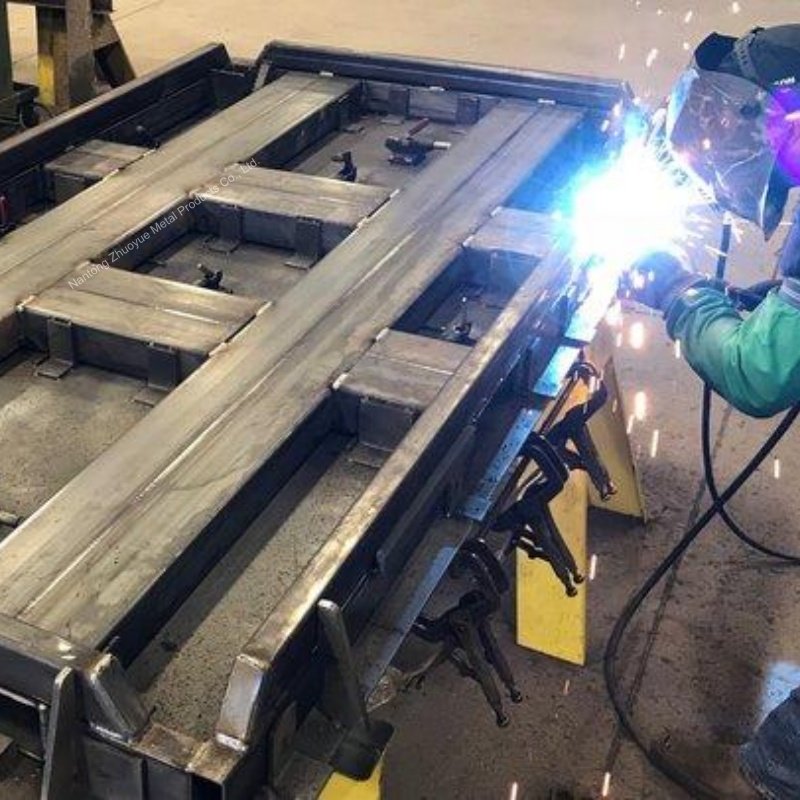
Material selection should be based on the engineering requirements of the finished trailer.
OEM buyers may specify:
- Material grade
- Material thickness
- Structural requirements
- Welding requirements
- Applicable material standards
The material should be selected together with the chassis design, expected loading conditions and manufacturing process.
For an OEM project, it is important to confirm the material specification before production rather than relying only on a general description such as “steel chassis.”
11. Choose the Right Surface Treatment
Trailer chassis are exposed to moisture, road conditions and outdoor environments, so corrosion protection is an important consideration.
Common options include:
Hot-Dip Galvanizing
Hot-dip galvanizing provides a zinc coating over the steel surface and is widely used where corrosion resistance is important.
It can be suitable for trailer chassis that are regularly exposed to outdoor and road environments.
Powder Coating
Powder coating provides a durable finished surface and allows the customer to specify the desired appearance.
It is commonly used where both corrosion protection and appearance are important.
The appropriate surface treatment depends on the operating environment, customer specifications and intended service conditions.
12. Consider How the Chassis Will Be Manufactured and Assembled
OEM buyers should consider not only the design of the chassis but also how it will be integrated into their own production process.
You may require:
- Welded chassis
- Partially assembled chassis
- Chassis with mounting brackets installed
- Chassis with surface treatment completed
- Chassis with running gear
- Rolling chassis
- Other specified assembly configurations
For high-volume OEM projects, the best configuration is often the one that reduces unnecessary work at the customer’s facility while remaining efficient to manufacture and ship.
13. Consider Shipping and Container Efficiency
For OEM buyers importing chassis from overseas, shipping efficiency can also influence the design and supply model.
A chassis with a large overall footprint can occupy significant container space even when its actual weight is relatively low.
Depending on the design, manufacturers may consider:
- Stacking arrangements
- Nested components
- Partial assembly
- Removable or separately packed components
- Optimized packaging
However, any packing or nesting solution should be evaluated together with assembly requirements and protection of the finished components.
The lowest shipping volume is not always the best solution if it creates additional assembly work or increases the risk of damage.
14. Standard or Custom Trailer Chassis?
One of the most important decisions is whether to use a standard chassis or develop a custom chassis.
A Standard Chassis May Be Suitable When:
- Trailer dimensions are conventional
- Payload requirements are straightforward
- Standard axle and suspension components are used
- Existing mounting points meet your requirements
- The trailer body can be adapted to the chassis
A Custom Chassis May Be Better When:
- Trailer dimensions are unique
- The body has specific mounting requirements
- Payload or weight distribution is unusual
- Specialized equipment is installed
- Specific axle or suspension components are required
- The chassis needs custom battery boxes or toolboxes
- The customer has its own engineering drawings
- The trailer will be produced in significant OEM quantities
For OEM manufacturing, customization can make the chassis better suited to the final production process.
15. What Information Should You Give a Trailer Chassis Manufacturer?
The more complete your initial information is, the easier it is for a manufacturer to evaluate the project.
Ideally, provide:
Trailer Information
- Trailer type
- Intended application
- Overall dimensions
- Target payload
- Estimated tare weight
- Target loaded weight
Running Gear
- Axle configuration
- Axle capacity
- Suspension type
- Brake requirements
- Hub requirements
- Wheel and tyre specifications
Structural Requirements
- Material specification
- Material thickness
- Frame dimensions
- Crossmember requirements
- Drawbar dimensions
- Body mounting points
- Equipment mounting points
Surface Treatment
- Hot-dip galvanizing
- Powder coating
- Painting
- Other specified treatment
Commercial Information
- Estimated order quantity
- Annual volume
- Prototype requirements
- Target delivery schedule
- Shipping destination
If available, also provide:
- 2D drawings
- 3D CAD files
- Existing samples
- Photos of the current chassis
- Assembly drawings
These materials can help the manufacturer understand the project more accurately.
A Simple Trailer Chassis Selection Checklist
Before requesting an OEM quotation, use this checklist:
Application
- What type of trailer is it?
- What will it carry?
Dimensions
- What are the required chassis length and width?
- What is the drawbar length?
- Where is the axle located?
Weight
- What is the estimated tare weight?
- What payload is required?
- What is the target loaded weight?
- How is the weight distributed?
Running Gear
- Single or tandem axle?
- What axle capacity is required?
- What suspension system will be used?
- What braking system is required?
Structure
- What material is required?
- What body mounting points are needed?
- Are reinforcement areas required?
- Are equipment mounting points required?
Surface Treatment
- Hot-dip galvanizing?
- Powder coating?
- Other treatment?
Supply Scope
- Frame only?
- Chassis assembly?
- Chassis with running gear?
- Rolling chassis?
Production
- Prototype quantity?
- Annual quantity?
- Required delivery schedule?
Having these details ready can make the engineering and quotation process much more efficient.
When Should You Consider a Custom Trailer Chassis?
A custom trailer chassis should be considered when the trailer cannot be adequately supported by a standard configuration.
This is particularly relevant when:
- The trailer body has unique dimensions
- The payload is specialized
- Equipment must be mounted directly to the chassis
- The axle or suspension configuration is non-standard
- The customer requires specific mounting interfaces
- The trailer is part of an OEM product line
For OEM manufacturers, a custom chassis can also provide better consistency across repeated production runs.
Once the design has been approved, the same specifications can be used for subsequent production orders, subject to the agreed engineering and quality requirements.
Final Thoughts
Choosing the right trailer chassis starts with the complete trailer application.
The correct chassis needs to match the trailer’s dimensions, payload, weight distribution, axle and suspension configuration, body mounting requirements and intended operating environment.
For OEM buyers, it is also important to define the scope of supply clearly. A welded frame, custom chassis and rolling chassis can represent very different levels of assembly.
Instead of selecting a chassis based only on size or advertised load capacity, work backward from the finished trailer and define the technical interfaces that the chassis needs to support.
If you have drawings, specifications or an existing trailer sample, an experienced OEM manufacturer can review the requirements and help develop a chassis configuration suitable for your application.
Looking for a custom trailer chassis for a camper, tiny house, utility, flatbed or specialized trailer?
Contact Zhuoyue Metal to discuss your project requirements.