Trailer Chassis vs. Trailer Frame: What’s the Difference?
When sourcing trailer components, OEM buyers often encounter two terms: trailer chassis and trailer frame.
Are they the same thing? Does a trailer chassis include more components than a trailer frame? And which term should you use when requesting a quotation from a manufacturer?
The answer is not always straightforward.
In the trailer industry, “chassis” and “frame” are sometimes used interchangeably, depending on the manufacturer, market and application. However, there can be an important difference in how the terms are used when defining an OEM project.
In general, a trailer frame refers primarily to the structural framework of the trailer, while a trailer chassis can refer to the broader structural base and the interfaces required to integrate the body, running gear and other components.
For OEM buyers, the most important point is not the terminology itself. It is making sure that the supplier clearly understands what structure and components are included in the required assembly.
What Is a Trailer Frame?
A trailer frame is the main structural framework that supports the trailer body or deck.
A typical trailer frame may include:
- Main longitudinal frame rails
- Crossmembers
- Drawbar or front frame structure
- Structural brackets
- Reinforcement members
- Body or floor mounting points
The frame provides the basic structural strength and geometry of the trailer.
For example, a flatbed trailer may use a steel frame with longitudinal rails and multiple crossmembers to support the deck.
A utility trailer may use a similar structural concept but with additional brackets for side panels, cage sections or other equipment.
The exact design depends on the trailer’s dimensions, payload, application and running gear configuration.

What Is a Trailer Chassis?
A trailer chassis can be understood as the structural foundation of the complete trailer.
Depending on the manufacturer and project scope, a chassis may include the main frame structure together with provisions or interfaces for other major trailer systems.
These may include:
- Axle mounting points
- Suspension mounting points
- Brake system interfaces
- Coupler mounting
- Body mounting points
- Stabilizer mounting
- Toolbox or battery box mounting
- Mudguard mounting
- Other equipment mounting structures
In some projects, the term chassis may also refer to a more complete assembly that includes running gear such as axles, suspension and wheels.
However, this is not universal.
That is why OEM buyers should always confirm the supplier’s exact scope of supply rather than assuming that the word “chassis” automatically includes axles, suspension or other components.
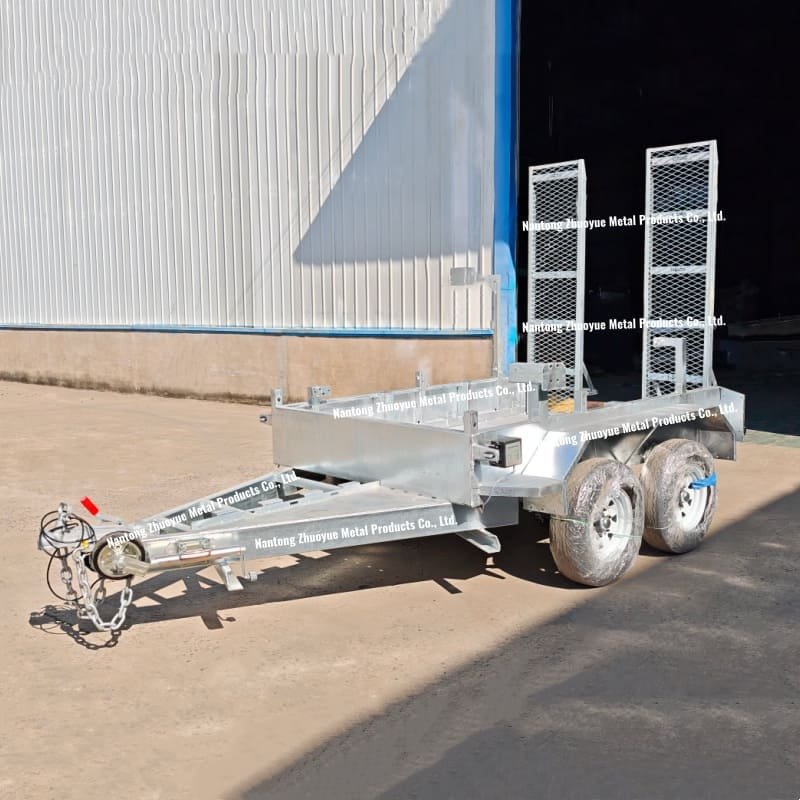
Trailer Chassis vs. Trailer Frame: The Basic Difference
The simplest way to understand the difference is:
Trailer frame = primarily the structural framework.
Trailer chassis = the structural foundation of the trailer, potentially including a broader range of interfaces and components.
However, these definitions are not fixed across the global trailer industry.
A supplier may quote a “trailer chassis” when they mean a welded structural frame. Another manufacturer may use “chassis” to describe a frame equipped with axle and suspension components.
Therefore, the terminology should always be confirmed during the technical quotation stage.
A Simple Comparison
| Feature | Trailer Frame | Trailer Chassis |
|---|---|---|
| Main frame rails | Yes | Yes |
| Crossmembers | Yes | Yes |
| Drawbar / A-frame | Often | Often |
| Body mounting points | Often | Yes |
| Axle mounting interfaces | May be included | Usually considered |
| Suspension interfaces | May be included | Usually considered |
| Equipment mounting | Application dependent | Application dependent |
| Axles and suspension supplied | Not normally implied | May be included depending on scope |
| Complete rolling chassis | No | May be available |
| OEM customization | Yes | Yes |
The table is a general guide rather than a universal industry standard. The exact definition depends on the project and supplier.
Why Do Manufacturers Use the Terms Differently?
There are several reasons why “trailer chassis” and “trailer frame” can mean slightly different things.
Different Industry Terminology
Different countries and trailer industries may use the terms differently.
A manufacturer supplying welded steel structures may call the assembly a trailer frame, while another supplier specializing in complete trailer platforms may call a similar assembly a trailer chassis.
Different Supply Scope
The same structural product may be described differently depending on what is included.
For example:
Frame only
A welded steel structure without running gear.
Chassis assembly
A structural frame with specified mounting interfaces.
Rolling chassis
A chassis equipped with components such as axles, suspension and wheels.
These are different supply scopes even if the basic structural frame is similar.
Different Trailer Applications
A camper trailer, utility trailer and specialized equipment trailer may use different terminology because their structures and supply chains are different.
For OEM procurement, the application should therefore be considered together with the terminology.
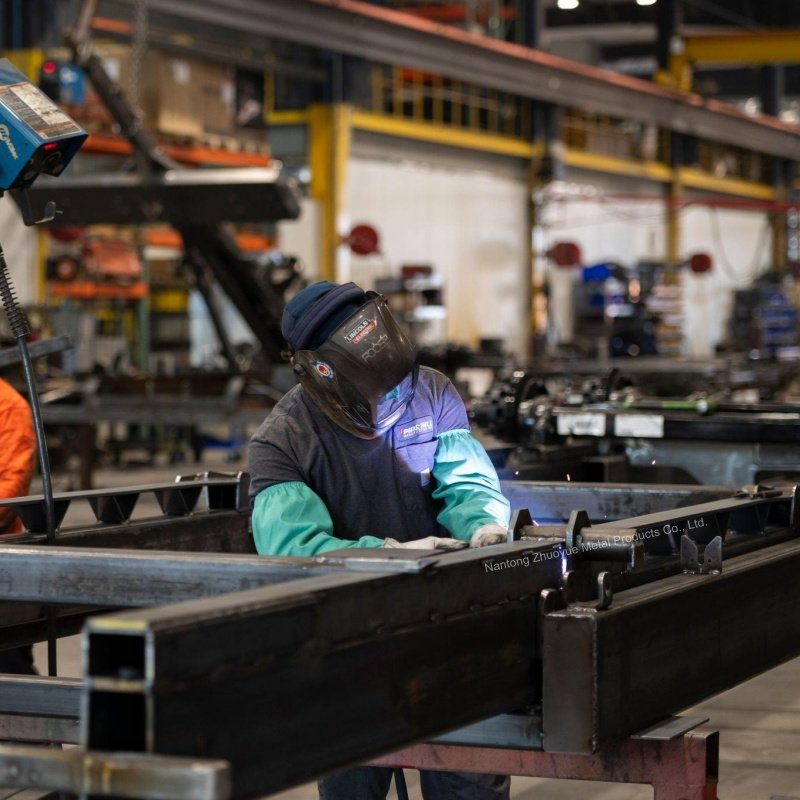
What Is Included in an OEM Trailer Chassis?
For an OEM project, a trailer chassis may be designed around the requirements of the complete finished trailer.
Depending on the project, the chassis structure can include provisions for:
Axle and Suspension
The chassis can be designed with mounting positions compatible with the selected axle and suspension system.
Axle position and suspension geometry should be confirmed during the engineering stage.
Coupler and Drawbar
The front section of the chassis provides the structural connection between the trailer and towing vehicle.
The drawbar configuration and coupler mounting need to match the intended towing system.
Trailer Body
The chassis can incorporate mounting points for the trailer body, floor, enclosure or deck.
This is particularly important when the OEM customer has a separately manufactured body.
Equipment
Specialized trailers may require additional structural interfaces for equipment such as:
- Toolboxes
- Battery boxes
- Stabilizers
- Spare wheels
- Hydraulic components
- Electrical equipment
- Specialized machinery
This is where a custom chassis can provide significant advantages over a generic frame.
Does a Trailer Frame Include the Axle?
Not necessarily.
A trailer frame is primarily a structural assembly. Axles and suspension are normally treated as separate running gear components unless the supplier specifically includes them in the quotation.
Similarly, a supplier may offer several levels of assembly:
Frame only → Chassis → Rolling chassis → Complete trailer
The exact configuration varies by manufacturer.
For this reason, an OEM buyer should never assume that a quotation for a “trailer chassis” automatically includes axles, wheels, brakes or suspension.
Always ask the supplier to define the scope of supply.
Trailer Frame vs. Rolling Chassis
A rolling chassis is generally a more complete assembly than a basic trailer frame.
It may include:
- Structural frame
- Drawbar
- Axles
- Suspension
- Hubs
- Brakes
- Wheels and tyres
The exact configuration depends on the project.
For OEM customers, a rolling chassis can reduce assembly work at the next stage of production.
However, shipping volume, local regulations, component sourcing and final assembly requirements should all be considered when deciding whether to purchase a frame, chassis or rolling chassis.
Which One Should OEM Buyers Order?
There is no single answer.
The right choice depends on what you need to manufacture locally and what you want your supplier to provide.
Choose a Trailer Frame When:
A frame may be appropriate when you:
- Manufacture the running gear locally
- Already have your own axle and suspension suppliers
- Need only the structural steel assembly
- Want to complete the trailer locally
- Require a specific frame design for your production process
Choose a Trailer Chassis When:
A chassis may be more suitable when you:
- Want a structural platform designed around the complete trailer
- Need specific axle and suspension mounting interfaces
- Require body mounting points
- Need additional equipment mounting structures
- Want the supplier to handle more of the engineering and assembly work
Choose a Rolling Chassis When:
A rolling chassis may be suitable when you:
- Want to reduce local assembly work
- Need axles and suspension supplied with the structure
- Prefer a more complete trailer platform
- Want to integrate your own body or equipment afterward
The best choice depends on your production model and target market.
How Should You Describe Your Requirements to a Manufacturer?
Instead of simply asking:
“Can you manufacture a trailer chassis?”
it is better to provide the supplier with a clear technical specification.
For example:
Trailer type: Camper trailer
Overall dimensions: 5,000 × 2,000 mm
Required payload: 1,500 kg
Axle configuration: Tandem axle
Suspension: Leaf spring
Body mounting: Customer drawing
Coupler: Customer specified
Surface treatment: Hot-dip galvanizing
Estimated annual quantity: 500 sets
Supply scope: Welded chassis with axle and suspension mounting provisions
This gives the manufacturer a much clearer understanding of what you actually need.
If you already have CAD drawings, 2D drawings or a previous production sample, these can also be provided for technical review.
What Should Be Confirmed Before Production?
Before a trailer chassis or frame enters production, OEM buyers should confirm the following information.
Structural Design
Confirm:
- Overall dimensions
- Frame rail configuration
- Crossmember spacing
- Drawbar dimensions
- Reinforcement requirements
Running Gear
Confirm:
- Axle type
- Axle position
- Suspension type
- Mounting dimensions
- Brake requirements
Body Interfaces
Confirm:
- Body mounting points
- Hole positions
- Floor support
- Enclosure mounting
- Equipment interfaces
Materials
Confirm:
- Material grade
- Material thickness
- Required certificates
- Welding requirements
Surface Treatment
Confirm:
- Hot-dip galvanizing
- Powder coating
- Painting
- Other specified treatment
Supply Scope
Most importantly, confirm exactly what the quotation includes.
For example:
Frame only?
Chassis structure?
Chassis with suspension?
Rolling chassis?
Complete trailer?
A clear scope of supply helps prevent misunderstandings during production and final assembly.
How Are Trailer Frames and Chassis Manufactured?
Although the terminology may differ, the manufacturing process for a steel trailer frame or chassis generally involves several fabrication stages.
1. Drawing Review
The manufacturer reviews the customer’s drawings, dimensions, materials and technical requirements.
2. Material Preparation
Steel or other specified materials are prepared according to the approved design.
3. Laser Cutting
Plates, brackets and other components can be cut to the required dimensions.
4. CNC Bending
Where required, sheet or plate components are accurately formed using CNC bending equipment.
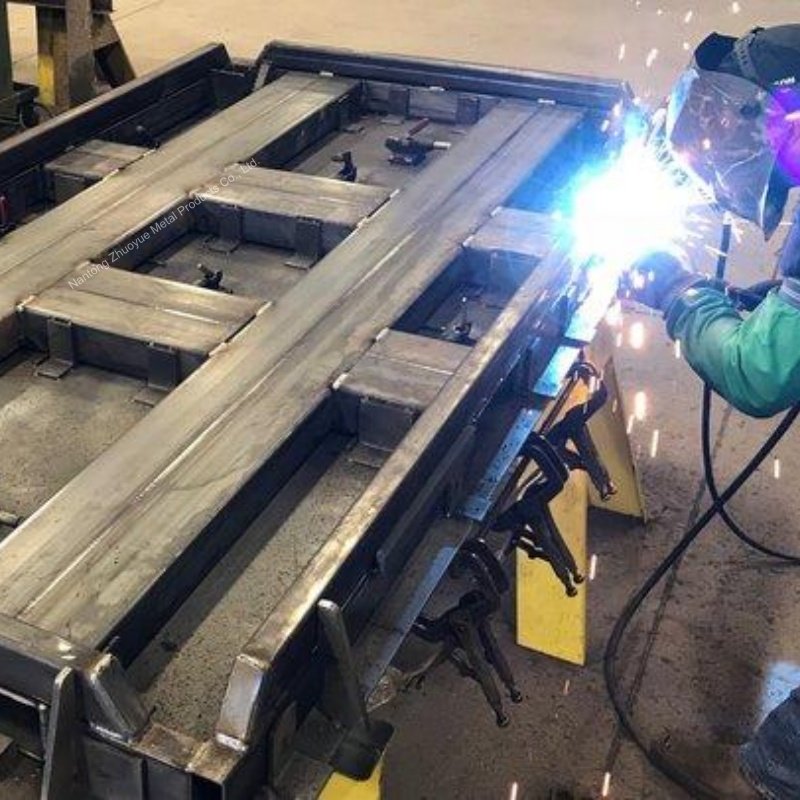
5. Welding and Structural Assembly
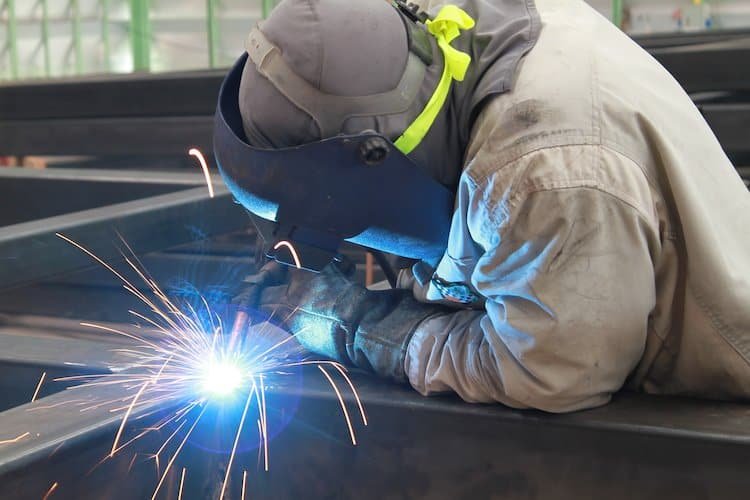
The frame rails, crossmembers, drawbar and brackets are assembled and welded according to the approved design.
6. Surface Treatment
The completed structure can receive the specified protective treatment, such as hot-dip galvanizing or powder coating.
7. Final Inspection
Key dimensions, weld quality, mounting points and other agreed requirements are checked before shipment.
For OEM projects, the manufacturing process should follow the approved drawings and technical specifications.
Why Customization Matters for OEM Trailer Frames and Chassis
Standard trailer frames can be useful for simple applications, but OEM manufacturers often need specific dimensions and interfaces.
A custom trailer chassis can be designed around:
- Trailer body dimensions
- Payload requirements
- Axle configuration
- Suspension system
- Drawbar requirements
- Body mounting
- Equipment mounting
- Battery boxes
- Toolboxes
- Stabilizer legs
- Surface treatment
- Local assembly requirements
This allows the structural platform to fit the customer’s final trailer design more accurately.
Trailer Chassis or Trailer Frame: Which Term Should You Use?
If you are communicating with a manufacturer, either term can be acceptable, but the technical scope should be clearly defined.
Instead of focusing only on whether the product should be called a “chassis” or “frame,” explain what you need the supplier to manufacture.
For example:
“We need a welded trailer chassis based on the attached drawing, including the drawbar, crossmembers and mounting points for our axle and suspension.”
This is much clearer than simply saying:
“We need a trailer frame.”
For OEM purchasing, clear technical specifications are more important than terminology.
Frequently Asked Questions
Is a trailer chassis the same as a trailer frame?
Not always. The terms are sometimes used interchangeably, but a trailer frame generally refers to the structural framework, while a chassis may describe a broader structural assembly and its interfaces with other trailer systems.
Does a trailer chassis include an axle?
Not necessarily. Axles may be supplied separately or included as part of a more complete chassis or rolling chassis package. Always confirm the supplier’s scope of supply.
Does a trailer frame include suspension?
Usually, suspension is a separate component unless it is specifically included in the supplied assembly.
What is a rolling chassis?
A rolling chassis is generally a more complete trailer platform that may include the structural frame together with axles, suspension, hubs, brakes and wheels. The exact configuration varies by project.
Can a trailer frame be customized?
Yes. OEM trailer frames can be customized according to dimensions, payload requirements, mounting points, materials and surface treatment.
Can a trailer chassis be manufactured from customer drawings?
Yes. OEM manufacturers can manufacture custom chassis or frames based on customer drawings and technical specifications, subject to technical review and production requirements.
Which is better: a standard trailer frame or a custom chassis?
Neither is universally better. A standard frame may be suitable for simple applications, while a custom chassis can provide better integration with a specific trailer body, running gear and production process.
What information should I provide when requesting a quotation?
Provide the trailer type, dimensions, payload, axle and suspension configuration, materials, mounting requirements, surface treatment, drawings and expected quantity.
Conclusion
The terms trailer chassis and trailer frame do not have one universally fixed definition across the trailer industry.
In general, a trailer frame refers to the primary structural framework, while a trailer chassis may describe the broader structural foundation and its interfaces with the trailer’s running gear, body and equipment.
For OEM buyers, the most important consideration is therefore not the name of the product, but the design, specifications and scope of supply.
Before placing an order, make sure the supplier clearly confirms the structural configuration, materials, mounting points, running gear interfaces, surface treatment and included components.
Whether you need a welded trailer frame, a custom trailer chassis or a more complete rolling chassis, clear technical communication at the beginning of the project can help reduce engineering changes and assembly issues later.
Looking for a custom trailer chassis or trailer frame for your OEM project? Contact Zhuoyue Metal to discuss your drawings, specifications and manufacturing requirements.
Looking for a custom trailer chassis or trailer frame for your OEM project?
Contact Zhuoyue Metal to discuss your drawings, specifications and manufacturing requirements.