A trailer chassis is the structural foundation of a trailer, so manufacturing accuracy and structural quality are critical to the performance of the finished trailer.
But how is a trailer chassis actually manufactured?
A typical OEM trailer chassis manufacturing process starts long before steel is cut. The manufacturer first reviews the customer’s requirements and drawings, confirms the structural design and mounting interfaces, and then moves through fabrication, welding, surface treatment, assembly and final inspection.
The exact process varies depending on the trailer type, material, design and production requirements. However, most custom steel trailer chassis projects follow a similar manufacturing sequence.
This guide explains the main steps involved in manufacturing a trailer chassis, from the initial drawing review to final inspection and shipment.
Trailer Chassis Manufacturing Process at a Glance
A typical OEM trailer chassis manufacturing process includes:
01 — Requirements & Drawings
02 — Technical Confirmation
03 — Prototype & Sample Approval
04 — Chassis Fabrication & Production
05 — Surface Treatment & Final Assembly
06 — Inspection & Shipment
Each stage plays an important role in turning an engineering design into a repeatable production chassis.
Step 1: Requirements and Drawings
The manufacturing process begins with the customer’s requirements and technical documentation.
Before production starts, the manufacturer needs to understand what the chassis is designed to do and how it will be integrated into the finished trailer.
Typical information includes:
- Trailer type
- Overall dimensions
- Required payload
- Target trailer weight
- Axle configuration
- Suspension type
- Drawbar dimensions
- Coupler requirements
- Body mounting points
- Equipment mounting points
- Material specifications
- Surface treatment
- Production quantity
For OEM projects, customers may provide:
- 2D engineering drawings
- 3D CAD files
- Existing samples
- Reference products
- Chassis specifications
- Assembly drawings
If a complete drawing is not available, the project can begin with technical specifications and reference information, depending on the manufacturer’s engineering capabilities.
Why Drawing Review Matters
A trailer chassis contains many interfaces that need to work with other components.
For example, the chassis may need to match:
- Axles
- Suspension
- Brakes
- Couplers
- Trailer bodies
- Floors
- Toolboxes
- Battery boxes
- Stabilizers
- Equipment
A dimensional error in one mounting interface can create problems during final assembly.
For this reason, technical requirements should be confirmed before material enters production.
Step 2: Technical Confirmation
Once the requirements have been received, the manufacturer reviews the design and confirms the production specifications.
This stage is particularly important for custom OEM trailer chassis.
The technical review may cover:
Overall Chassis Dimensions
The manufacturer checks the overall length, width, height and other critical dimensions.
Structural Configuration
The main frame rails, crossmembers, drawbar and reinforcement structures are reviewed.
Mounting Interfaces
The manufacturer confirms the required mounting points for:
- Axles
- Suspension
- Body
- Coupler
- Brackets
- Equipment
- Electrical components
Material
The required material grade, thickness and applicable specifications are confirmed.
Manufacturing Requirements
The manufacturer evaluates whether the design is suitable for laser cutting, bending, welding and the specified surface treatment.
Surface Treatment
The required treatment, such as hot-dip galvanizing or powder coating, is confirmed before production.
For OEM projects, this technical confirmation stage helps prevent unnecessary design changes after fabrication has started.
Step 3: Prototype and Sample Approval
For a new trailer chassis design, a prototype or sample may be manufactured before moving into regular production.
A sample can help verify:
- Overall dimensions
- Mounting hole positions
- Drawbar configuration
- Axle and suspension interfaces
- Body mounting points
- Bracket locations
- Assembly fit
- Structural details
The exact sample inspection requirements depend on the customer’s project.
Why Prototypes Matter for OEM Projects
A drawing may look correct on paper, but the finished chassis needs to work with the customer’s other components.
For example, a body mounting hole may need to align with a corresponding hole or bracket on the trailer body.
A prototype gives the OEM customer an opportunity to verify important interfaces before committing to larger production quantities.
Once the sample is approved, the agreed design and specifications can become the basis for repeat production.
Step 4: Chassis Fabrication and Production
After the design has been confirmed, the trailer chassis moves into fabrication.
For steel trailer chassis, this stage can involve several manufacturing processes.
4.1 Material Preparation
The required steel plate, tube, profiles and other structural materials are prepared according to the approved design.
Material dimensions and specifications should match the production drawings.
Depending on the project, different materials and thicknesses may be used for:
- Main frame members
- Crossmembers
- Brackets
- Drawbars
- Reinforcement plates
- Mounting structures
The material specification should be confirmed before production.
4.2 Laser Cutting
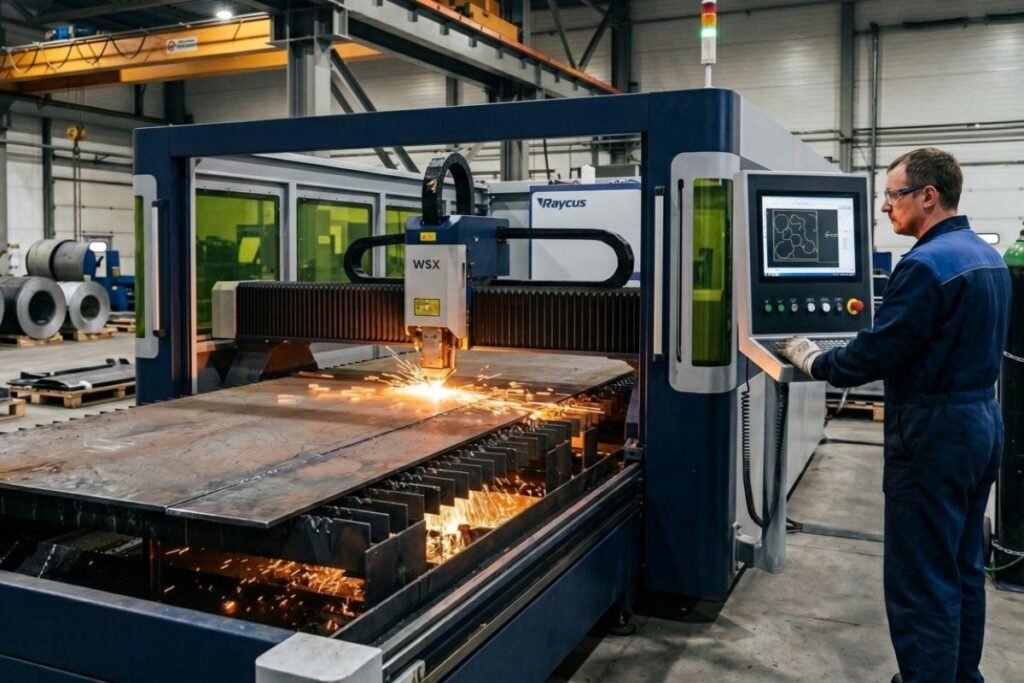
Laser cutting is commonly used to produce accurately shaped plates, brackets and other chassis components.
Typical laser-cut components include:
- Mounting brackets
- Reinforcement plates
- Gussets
- Suspension brackets
- Equipment mounting plates
- Structural connection plates
Laser cutting can provide consistent dimensions and repeatability across OEM production runs.
For parts that require multiple holes or complex profiles, CNC laser cutting can also help maintain consistent positioning.
4.3 CNC Bending
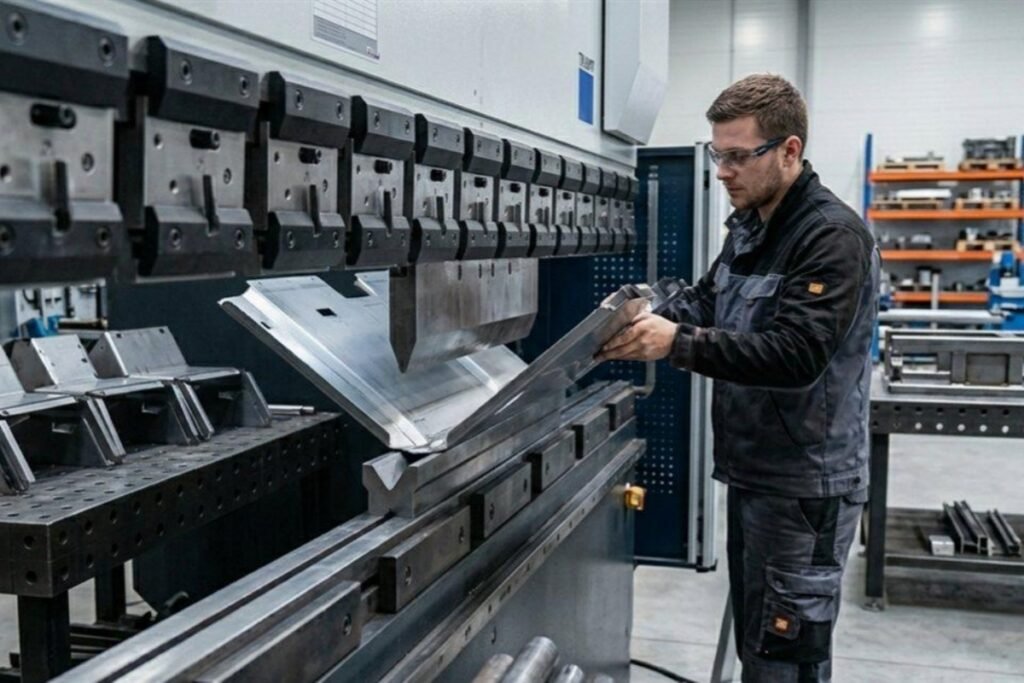
Some chassis components require bending rather than being produced as flat plates.
CNC bending can be used to form:
- Brackets
- Channels
- Reinforcement components
- Mounting structures
- Other sheet or plate components
The bending process needs to follow the approved drawings, including the required dimensions and angles.
Accurate bending is important because the finished component must fit correctly during welding and assembly.
4.4 Welding and Structural Assembly
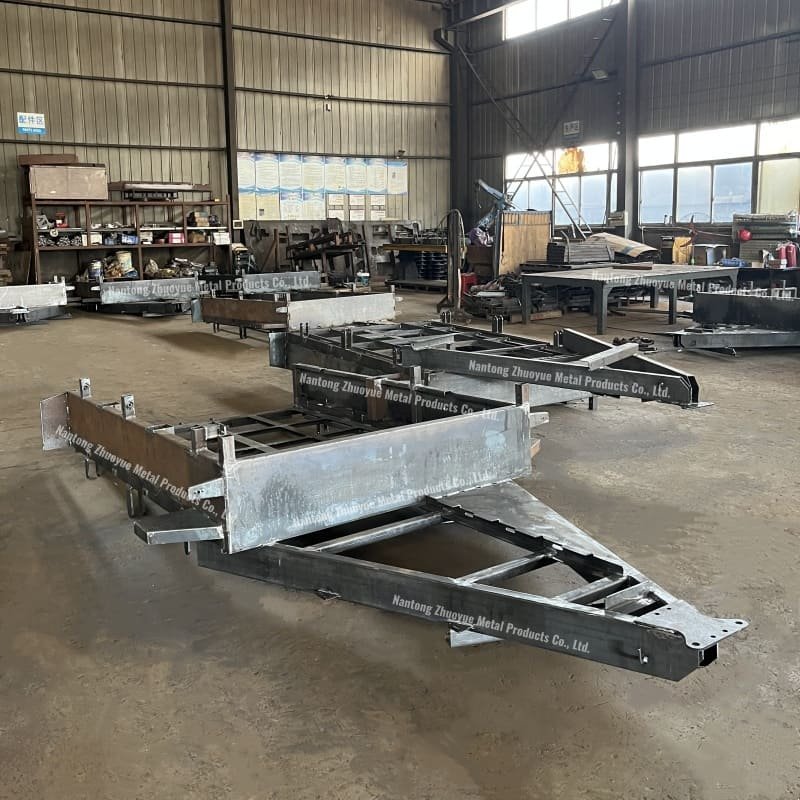
After the individual components have been prepared, they are assembled into the chassis structure.
This may include:
- Main frame rails
- Crossmembers
- Drawbar
- Brackets
- Reinforcement structures
- Mounting plates
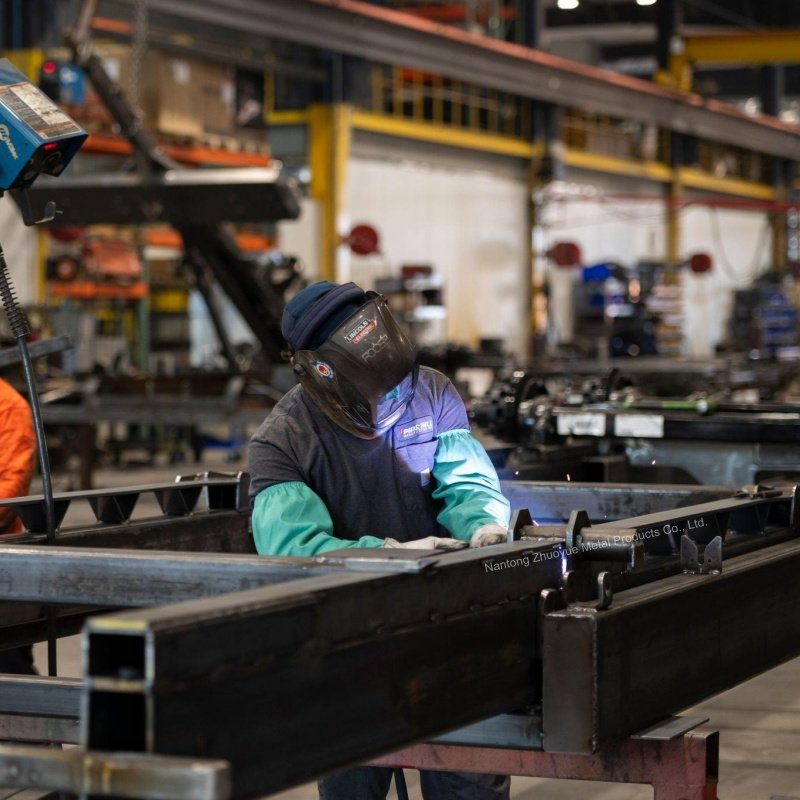
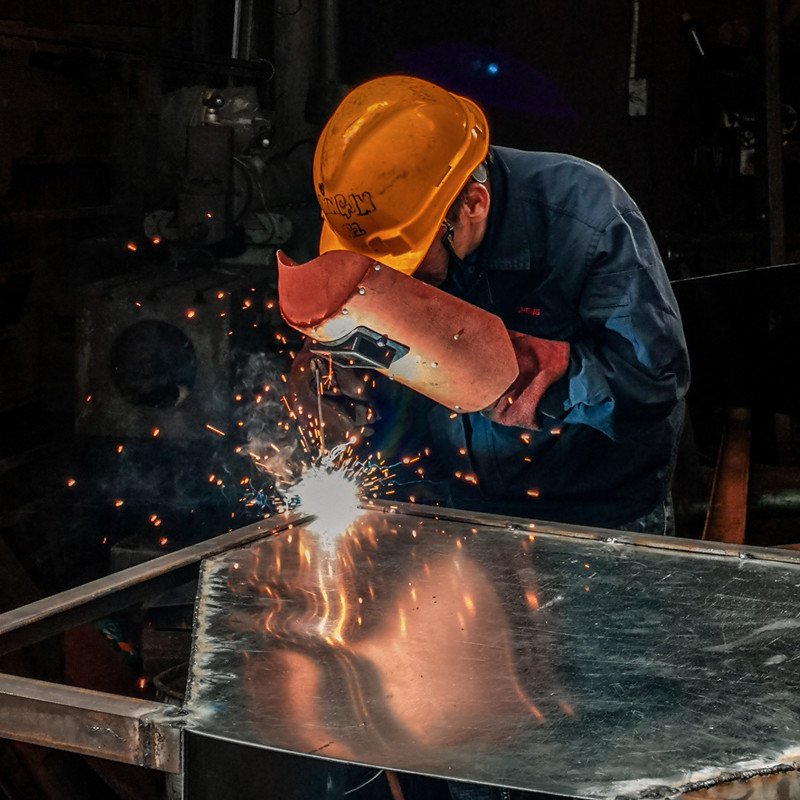
Welding joins the individual components into a rigid structural assembly.
For OEM production, welding fixtures or controlled assembly methods can help maintain repeatability between units.
The welding process should follow the agreed technical and quality requirements for the project.
4.5 Dimensional Checks During Fabrication
Dimensional checks may be carried out during fabrication to confirm that critical dimensions remain within the agreed requirements.
Important areas can include:
- Overall length
- Overall width
- Frame alignment
- Crossmember positions
- Drawbar geometry
- Mounting hole locations
- Axle mounting points
- Body mounting interfaces
Checking critical dimensions before surface treatment can help identify problems while they are still easier to correct.
Step 5: Surface Treatment and Final Assembly
After fabrication and structural inspection, the chassis receives the specified surface treatment.
The treatment depends on the customer’s requirements and intended application.
Hot-Dip Galvanizing
Hot-dip galvanizing applies a protective zinc coating to the steel surface.
It is commonly selected for trailer chassis where corrosion resistance is an important consideration.
For outdoor trailer applications, galvanizing can provide protection against environmental exposure and help extend the service life of the steel structure.
Powder Coating
Powder coating provides a finished protective coating and allows the customer to specify the required appearance.
It may be selected when both corrosion protection and a finished appearance are important.
Other Surface Treatments
Depending on the project, other surface treatments may also be specified.
The treatment should be confirmed during the engineering and quotation stage because it can affect the production process, dimensions and final assembly.
Final Assembly
After surface treatment, the chassis can move into final assembly according to the agreed scope of supply.
Depending on the project, this may include installation of:
- Brackets
- Toolboxes
- Battery boxes
- Stabilizer components
- Mudguards
- Axles
- Suspension components
- Other specified components
Not every OEM chassis requires the same level of assembly.
Some customers may require a welded and surface-treated chassis only, while others may require a more complete chassis or rolling chassis.
The supply scope should therefore be clearly defined before production.
Step 6: Inspection and Shipment
The final stage is inspection, packing and shipment.
Before shipment, the manufacturer checks the finished chassis against the agreed requirements.
Final Inspection
Depending on the project, final inspection may include:
- Overall dimensions
- Mounting hole positions
- Structural configuration
- Welding quality
- Surface treatment
- Assembly condition
- Quantity
- Packing condition
The exact inspection criteria should be agreed with the customer during the project.
Packing
Trailer chassis are usually large structural assemblies, so packing needs to protect critical components while also making efficient use of shipping space.
For OEM orders, the packing method can be designed around:
- Container loading
- Stacking requirements
- Component protection
- Assembly requirements
- Export handling
Shipment
After final inspection and packing, the finished chassis are prepared for export shipment according to the agreed commercial and logistics terms.
What Manufacturing Processes Are Used for Trailer Chassis?
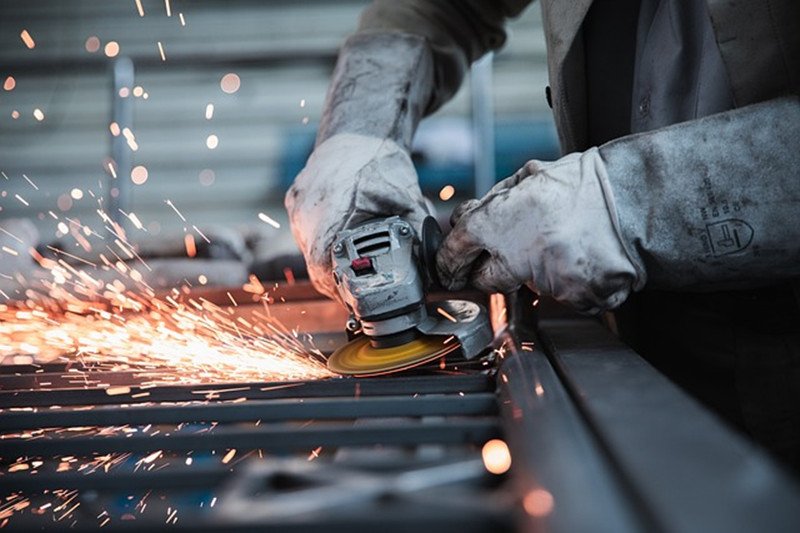
The exact manufacturing process depends on the design, but a custom steel trailer chassis may involve several fabrication technologies.
Laser Cutting
Used for accurate cutting of plates, brackets and structural components.
CNC Bending
Used to form sheet and plate components into the required shapes.
Welding
Used to join frame members, crossmembers, brackets and reinforcement structures.
Surface Treatment
Hot-dip galvanizing, powder coating or other specified treatments can be used to protect the finished chassis.
Assembly
Components and specified running gear can be assembled according to the customer’s requirements.
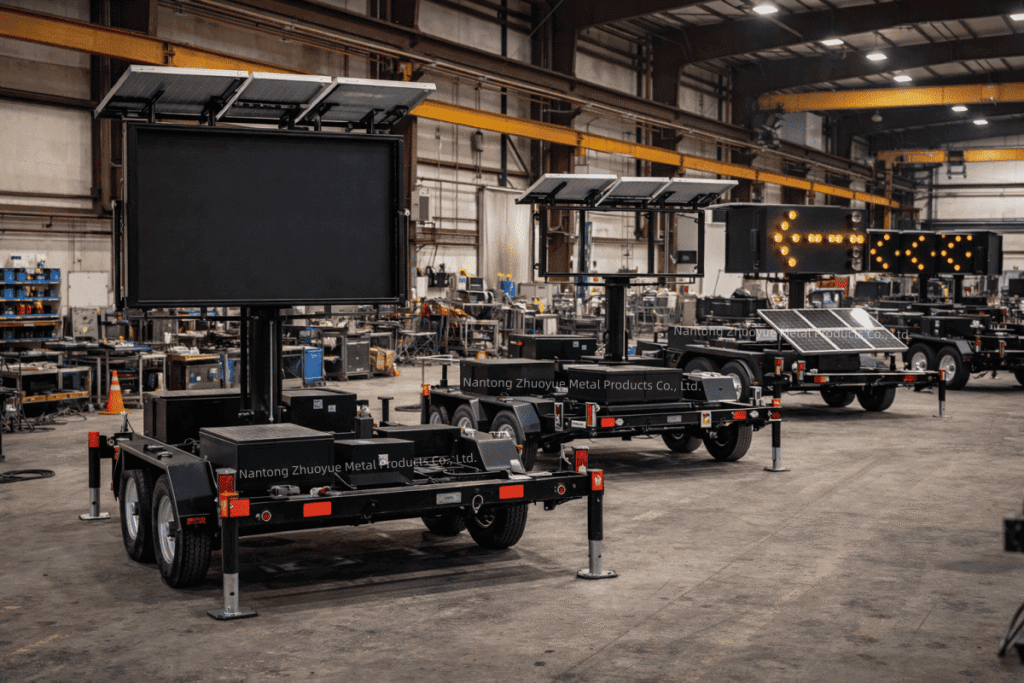
The combination of these processes allows a manufacturer to produce both relatively simple trailer frames and more complex OEM chassis assemblies.
How Does Custom Trailer Chassis Manufacturing Differ From Standard Production?
A standard trailer chassis may follow an established design with fixed dimensions and components.
Custom OEM manufacturing usually involves additional engineering and technical confirmation.
The process may include:
Customer requirements
↓
Engineering review
↓
Drawing confirmation
↓
Prototype / sample
↓
Production
↓
Inspection
↓
Repeat OEM production
This approach is particularly useful when the customer has a specific trailer body, unique mounting interfaces or specialized equipment.
Once the design and production process have been validated, the same specifications can be used for subsequent production orders.
What Can Be Customized on a Trailer Chassis?
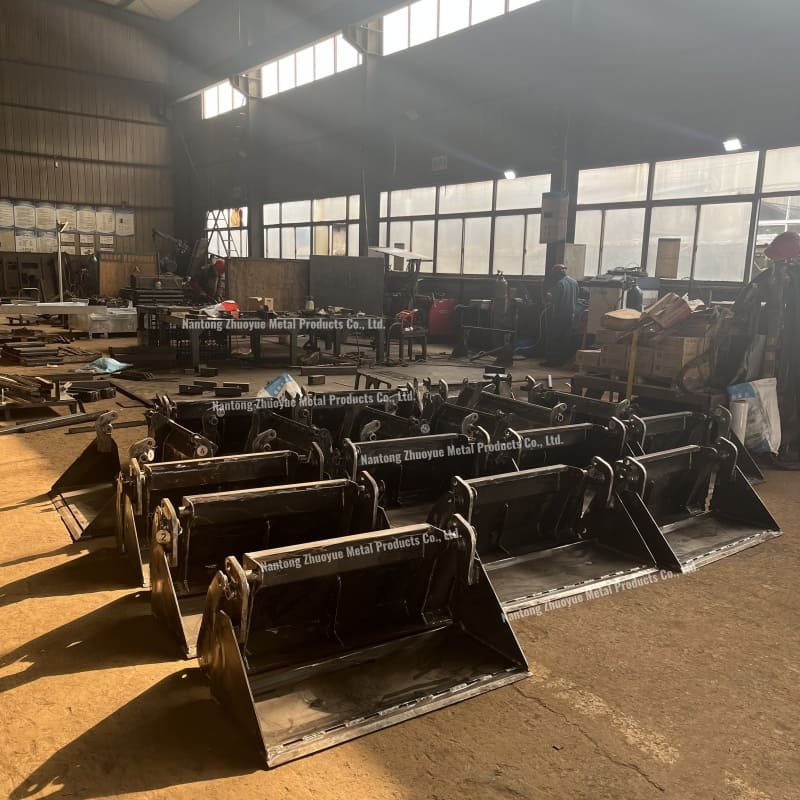
Depending on the project, OEM trailer chassis can be customized in many areas.
Dimensions
- Length
- Width
- Height
- Drawbar length
- Crossmember spacing
Structural Configuration
- Frame rail design
- Crossmember arrangement
- Reinforcement
- Drawbar configuration
- Brackets
Mounting Interfaces
- Axle mounting
- Suspension mounting
- Body mounting
- Equipment mounting
- Toolbox mounting
- Battery box mounting
- Stabilizer mounting
Materials
The customer may specify the required material grade and thickness according to the engineering requirements.
Surface Treatment
- Hot-dip galvanizing
- Powder coating
- Painting
- Other specified treatments
Assembly Scope
The chassis may be supplied as:
- Welded frame
- Surface-treated chassis
- Chassis with selected components
- Rolling chassis
- Other agreed configurations
What Should OEM Buyers Check During Manufacturing?
OEM buyers should not wait until final delivery to discover dimensional or assembly problems.
Important checkpoints include:
Before Production
Confirm:
- Approved drawings
- Material specifications
- Chassis dimensions
- Mounting interfaces
- Surface treatment
- Supply scope
During Fabrication
Check:
- Cutting dimensions
- Bending dimensions
- Frame alignment
- Welded structure
- Mounting locations
Before Surface Treatment
Verify:
- Overall dimensions
- Critical hole positions
- Axle and suspension interfaces
- Body mounting points
- Structural configuration
Before Shipment
Confirm:
- Final dimensions
- Surface treatment
- Assembly
- Quantity
- Packing
- Shipping documentation
The exact inspection plan should be established according to the customer’s quality requirements and project specifications.
How Long Does It Take to Manufacture a Trailer Chassis?
The production time depends on several factors, including:
- Chassis complexity
- Material availability
- Prototype requirements
- Quantity
- Surface treatment
- Assembly scope
- Inspection requirements
- Production schedule
A simple standard design may move through production more quickly than a completely new custom chassis requiring prototype development and approval.
For OEM projects, it is therefore better to establish the production schedule after the drawings, specifications and sample requirements have been confirmed.
How Can OEM Buyers Make the Manufacturing Process More Efficient?
A well-prepared project can significantly reduce unnecessary engineering changes and delays.
Provide Complete Drawings
If available, provide both 2D drawings and 3D CAD files.
Clearly Define Interfaces
Confirm axle, suspension, body and equipment mounting points before production.
Confirm Material Requirements Early
Avoid changing material specifications after fabrication has started.
Approve the Prototype Before Mass Production
For new designs, sample approval can help identify issues before larger quantities are manufactured.
Standardize Repeat Orders
Once the design has been approved, maintain a controlled specification for repeat production.
This can improve consistency between production batches.
From Engineering Drawing to Finished Trailer Chassis
A professional trailer chassis manufacturing process is more than cutting and welding steel.
It starts with understanding the application and continues through technical confirmation, prototype validation, fabrication, surface treatment, assembly and final inspection.
A typical process can be summarized as:
01 — Requirements & Drawings
Review the customer’s drawings, dimensions, payload requirements, materials and application specifications.
02 — Technical Confirmation
Confirm the chassis structure, mounting points, interfaces, materials and key production specifications.
03 — Prototype & Sample Approval
Manufacture a prototype or sample when required, then verify key dimensions, structure and assembly requirements before production.
04 — Chassis Fabrication & Production
Carry out laser cutting, CNC bending, welding and structural assembly according to the approved drawings and specifications.
05 — Surface Treatment & Final Assembly
Complete hot-dip galvanizing, powder coating or other specified surface treatment, followed by final assembly as required.
06 — Inspection & Shipment
Complete agreed quality inspections, final checks, packing and export shipment arrangements.
This structured process helps turn an OEM design into a repeatable production chassis.
Frequently Asked Questions
What materials are used to manufacture trailer chassis?
Steel is commonly used for trailer chassis, while the specific material grade and thickness depend on the trailer design, loading requirements and customer specifications.
How are trailer chassis welded?
Trailer chassis components such as frame rails, crossmembers, drawbars and brackets are assembled and welded according to the approved engineering design and manufacturing requirements.
Can a trailer chassis be manufactured from customer drawings?
Yes. Custom OEM trailer chassis can be manufactured from customer drawings, CAD files or technical specifications, subject to engineering review and production confirmation.
What is the difference between trailer chassis fabrication and trailer frame fabrication?
The terms can overlap in the trailer industry. Both may involve cutting, bending and welding structural components. The main difference is usually the defined scope of the supplied assembly rather than the fabrication technology itself.
Can trailer chassis be hot-dip galvanized?
Yes. Hot-dip galvanizing can be specified as a surface treatment for steel trailer chassis when corrosion protection is required.
Can a manufacturer supply a chassis with suspension and axles?
Depending on the project and supplier scope, a chassis can be supplied with selected running gear components such as axles and suspension.
Can trailer chassis be manufactured in OEM quantities?
Yes. Custom chassis can be developed for prototype production and then manufactured in repeat OEM quantities after the design and specifications have been approved.
How do I start an OEM trailer chassis project?
Provide the trailer type, dimensions, payload, drawings or reference samples, axle and suspension requirements, material specifications, surface treatment and estimated quantity.
The manufacturer can then review the requirements and confirm the next engineering and production steps.
Conclusion
Manufacturing a trailer chassis involves much more than welding a steel frame.
A reliable OEM process begins with clear requirements and drawings, followed by technical confirmation, prototype validation, precision fabrication, welding, surface treatment, assembly and final inspection.
For OEM buyers, working with a manufacturer that can manage multiple stages of the process can simplify sourcing and help maintain consistency across production batches.
Whether you are developing a camper trailer, tiny house trailer, utility trailer, flatbed trailer or specialized equipment trailer, the chassis should be manufactured around the requirements of the finished product.
If you have an existing drawing, CAD file, sample or trailer specification, Zhuoyue Metal can review your requirements and discuss a custom OEM trailer chassis manufacturing solution.
Looking for an OEM trailer chassis manufacturer?
Contact Zhuoyue Metal to discuss your drawings, production requirements, and target quantities.