Trailer chassis are exposed to demanding operating environments, including rain, road spray, moisture, dirt, salt and changing weather conditions. For trailers that need long-term corrosion protection, a hot-dip galvanized trailer chassis can provide an effective and durable surface protection solution.
Hot-dip galvanizing is widely used for steel structures that require protection against corrosion while maintaining the structural performance of the underlying steel. For OEM trailer manufacturers, choosing the right surface treatment is an important part of trailer chassis design and production.
In this guide, we explain what a hot-dip galvanized trailer chassis is, its key benefits, suitable applications and the factors OEM buyers should consider when selecting galvanized chassis for their trailer projects.
What Is a Hot-Dip Galvanized Trailer Chassis?
A hot-dip galvanized trailer chassis is a steel trailer chassis that has been immersed in molten zinc after fabrication.
During the hot-dip galvanizing process, the prepared steel surface reacts with molten zinc to form a series of zinc-iron alloy layers with an outer zinc layer. This galvanized coating helps protect the steel from corrosion and provides a durable surface for demanding outdoor applications.
Unlike paint or powder coating, hot-dip galvanizing protects the steel through both barrier protection and sacrificial protection. If the zinc coating is locally damaged, the surrounding zinc can provide additional protection to the exposed steel.
For trailer manufacturers, hot-dip galvanizing can therefore be considered as part of the overall chassis design and corrosion-protection strategy.
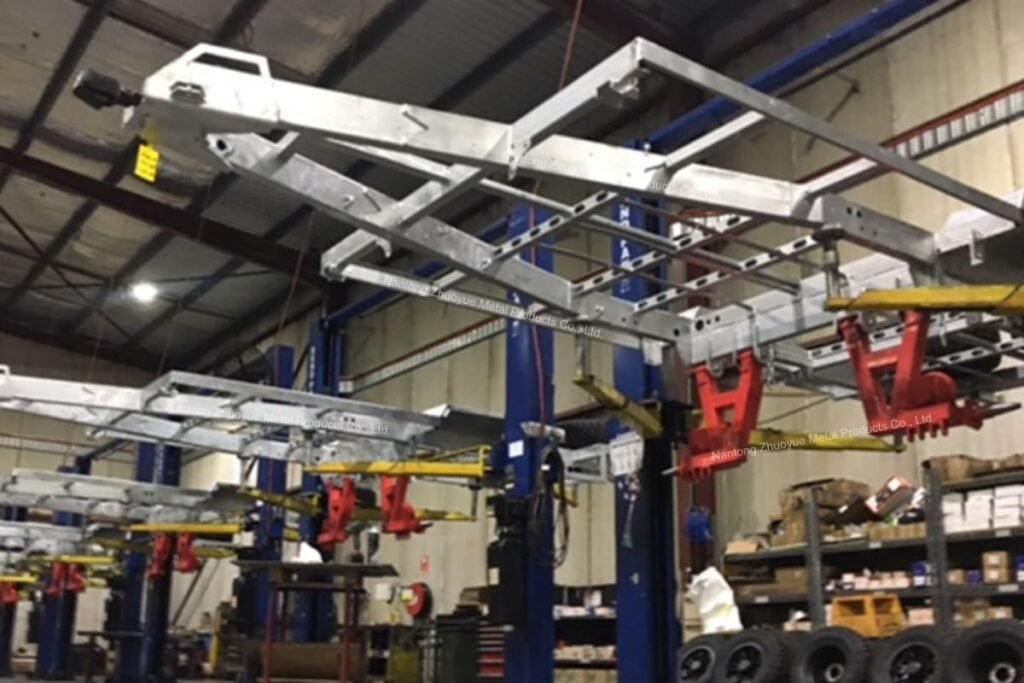
Why Choose a Hot-Dip Galvanized Trailer Chassis?
1. Excellent Corrosion Protection
The primary reason to choose hot-dip galvanizing is corrosion protection.
Trailer chassis are frequently exposed to moisture, road spray and outdoor conditions. A galvanized zinc coating provides a protective barrier between the steel substrate and the surrounding environment.
This can be particularly useful for trailers that operate outdoors for extended periods or are regularly exposed to wet or corrosive conditions.
2. Suitable for Outdoor Trailer Applications
Many trailer chassis are permanently exposed to outdoor environments.
Camper trailers, utility trailers, equipment trailers and specialized mobile equipment may spend significant time outdoors, making corrosion resistance an important consideration.
Hot-dip galvanized steel can provide a practical surface treatment for these applications where long-term exposure to weather is expected.
3. Durable Zinc Coating
The galvanized coating is metallurgically bonded to the steel surface during the galvanizing process.
This creates a durable coating that is different from a conventional paint film. The zinc coating can withstand handling, transportation and normal outdoor exposure when the chassis is properly designed and galvanized.
4. Sacrificial Protection
One important characteristic of zinc is its ability to provide sacrificial protection.
If a small area of the galvanized coating becomes damaged, the surrounding zinc can help protect the exposed steel through galvanic action.
This provides an additional level of protection that is particularly valuable for steel structures used in outdoor environments.
5. Reduced Maintenance Requirements
A durable corrosion-protection system can help reduce the need for frequent surface maintenance.
For OEM trailer manufacturers and fleet operators, this can be an important consideration when evaluating the long-term ownership and maintenance requirements of a trailer.
However, the actual service life of a galvanized chassis depends on coating thickness, environmental conditions, trailer design, drainage, exposure and maintenance.
Hot-Dip Galvanized Trailer Chassis vs. Painted Chassis
Both hot-dip galvanizing and paint or powder coating can be used to protect steel trailer chassis. The most suitable option depends on the application and customer requirements.
| Feature | Hot-Dip Galvanizing | Powder Coating / Paint |
|---|---|---|
| Corrosion protection | Excellent | Good when properly applied |
| Outdoor exposure | Well suited | Well suited |
| Zinc sacrificial protection | Yes | No |
| Surface appearance | Metallic zinc finish | Wide range of colors and finishes |
| Color customization | Limited | Excellent |
| Maintenance | Generally low | May require touch-up if coating is damaged |
| Typical use | Outdoor steel structures and chassis | Appearance-focused or protected applications |
For projects where both corrosion resistance and appearance are important, a suitable duplex system combining galvanizing and an additional coating may also be considered, depending on the application.
Which Trailer Applications Benefit from Galvanized Chassis?
Hot-dip galvanized trailer chassis can be used for many types of trailers and mobile equipment.
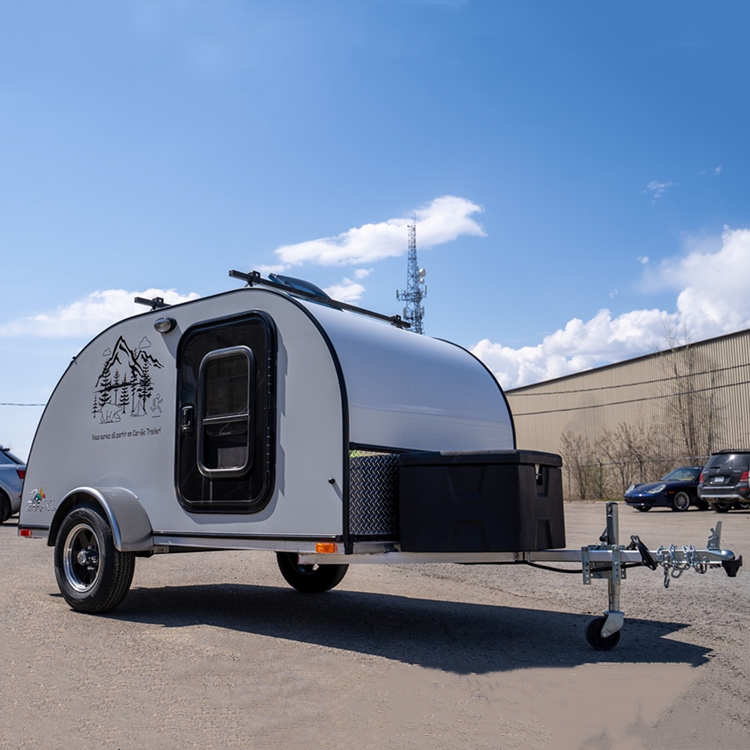
Camper Trailer Chassis
Camper trailers are frequently exposed to rain, road spray, dirt and changing weather conditions.
A galvanized chassis can provide additional corrosion protection for the structural steel underneath the camper body.
Utility Trailer Chassis
Utility trailers are commonly used outdoors and may carry landscaping equipment, construction materials, tools or other loads.
For utility trailer manufacturers, corrosion protection can be an important consideration when developing a durable chassis for regular outdoor use.
Flatbed Trailer Chassis
Flatbed trailers have an open structure and are directly exposed to environmental conditions.
Hot-dip galvanizing can be considered where long-term outdoor corrosion protection is required.
Equipment Trailer Chassis
Equipment trailers used for construction, agriculture, maintenance and other outdoor applications can benefit from durable corrosion protection.
Specialized Trailer Chassis
Specialized trailers for traffic management, mobile equipment and other outdoor applications may also require corrosion-resistant steel structures.
For these projects, the chassis design, mounting points, load requirements and surface treatment should be considered together during the engineering stage.
How Is a Trailer Chassis Hot-Dip Galvanized?
The hot-dip galvanizing process generally takes place after the steel chassis has been fabricated.
The overall manufacturing sequence can include:
Step 1: Chassis Fabrication
Steel components are cut, bent and welded according to the approved engineering drawings.
Step 2: Surface Preparation
The fabricated chassis is prepared for galvanizing. Proper surface preparation is important for achieving a consistent galvanized coating.
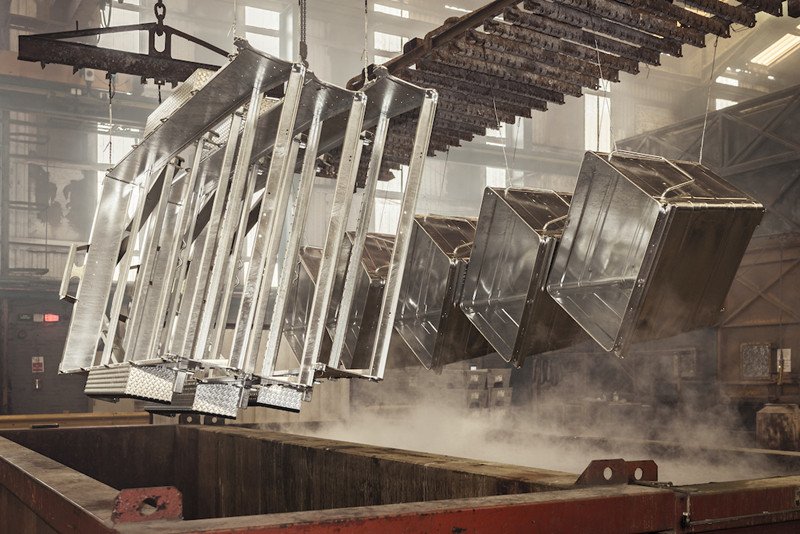
Step 3: Hot-Dip Galvanizing
The prepared steel chassis is immersed in a molten zinc bath.
The zinc reacts with the steel surface to form the galvanized coating.
Step 4: Inspection
The galvanized chassis is inspected for coating condition, appearance and key dimensional requirements.
Step 5: Final Assembly
Depending on the project requirements, additional components can be installed after galvanizing.
The actual process and inspection requirements should be confirmed with the galvanizing supplier and according to the applicable project specifications.
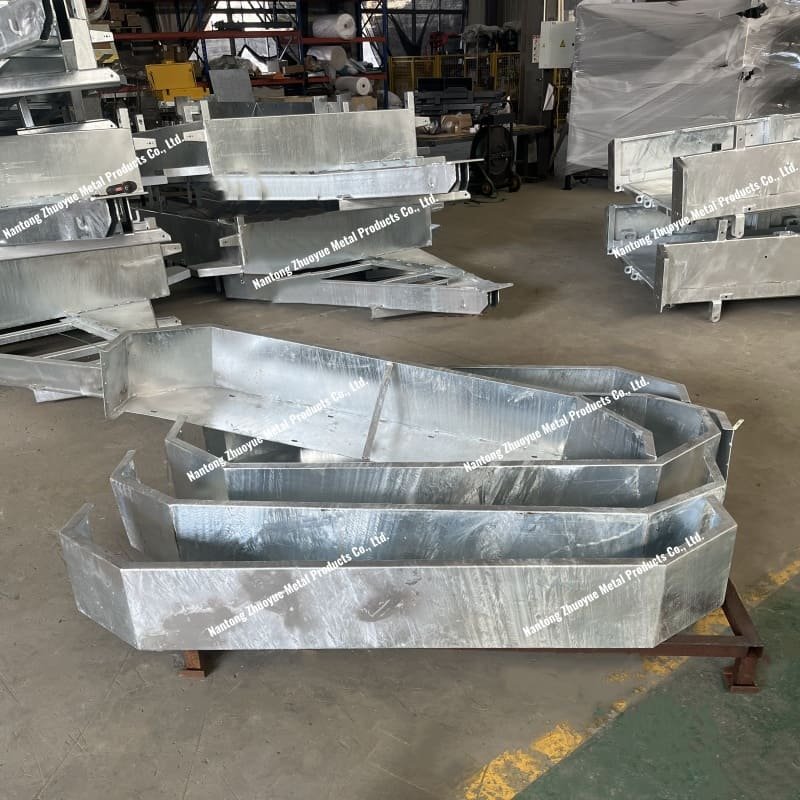
Important Design Considerations Before Galvanizing
OEM buyers should consider galvanizing requirements before the chassis enters production.
Drainage and Ventilation
Hollow sections and enclosed structures may require appropriate vent and drain openings for the galvanizing process.
These openings should be considered during engineering and fabrication rather than added after the chassis has already been manufactured.
Welding and Fabrication
Welded areas, overlaps and fabrication details can affect the galvanizing process and final coating.
The chassis should therefore be designed with the intended surface treatment in mind.
Dimensional Requirements
Hot-dip galvanizing can affect dimensions slightly because a zinc coating is added to the steel surface.
For assemblies with tight tolerances, mounting interfaces, threaded holes or other precision requirements, the galvanizing process should be considered during the design stage.
Handling and Lifting
Large trailer chassis need suitable lifting and handling points during the galvanizing process.
These requirements should be reviewed with the galvanizing supplier before production.
What OEM Buyers Should Specify
When requesting a quotation for a hot-dip galvanized trailer chassis, OEM buyers should provide as much technical information as possible.
Important information can include:
- Trailer application
- Overall chassis dimensions
- Target gross trailer weight
- Payload requirements
- Axle and suspension configuration
- Steel material requirements
- Chassis drawings or 3D models
- Mounting points and interfaces
- Surface treatment requirements
- Galvanizing specifications, if applicable
- Required inspection or quality documentation
- Expected annual quantity
- Packaging and shipping requirements
Providing these details early allows the manufacturer to evaluate the chassis structure, production process and surface-treatment requirements more accurately.
Hot-Dip Galvanizing for OEM Trailer Chassis Manufacturing
For OEM trailer manufacturers, surface treatment should not be considered separately from chassis fabrication.
The manufacturing process can be planned from engineering and material selection through laser cutting, bending, welding, galvanizing, assembly and final inspection.
At Zhuoyue Metal, we provide OEM trailer chassis manufacturing and custom metal fabrication for different trailer applications. Our manufacturing capabilities include laser cutting, CNC bending, welding, surface treatment and assembly.
We can manufacture custom trailer chassis according to customer drawings, dimensions, material requirements and application specifications.
Hot-Dip Galvanized Trailer Chassis for Long-Term Outdoor Use
Choosing a hot-dip galvanized trailer chassis can be a practical option for OEM projects where corrosion protection and long-term outdoor exposure are important considerations.
The best surface treatment depends on the trailer application, operating environment, structural design, appearance requirements and expected service conditions.
For a custom trailer chassis project, it is important to evaluate the chassis design and surface treatment together rather than selecting galvanizing as an afterthought.

Frequently Asked Questions
What is a hot-dip galvanized trailer chassis?
A hot-dip galvanized trailer chassis is a fabricated steel trailer chassis that has been immersed in molten zinc to create a protective galvanized coating.
Is hot-dip galvanizing better than powder coating for trailer chassis?
Neither is universally better. Hot-dip galvanizing provides zinc-based corrosion protection and sacrificial protection, while powder coating provides a customizable decorative finish. The best option depends on the application and environmental conditions.
Can camper trailer chassis be hot-dip galvanized?
Yes. Hot-dip galvanizing can be used for many steel camper trailer chassis where additional corrosion protection is required.
Can a custom trailer chassis be galvanized?
Yes. Custom trailer chassis can be designed and fabricated with hot-dip galvanizing as the specified surface treatment. Galvanizing requirements should be considered during the engineering and fabrication stages.
Does hot-dip galvanizing change the dimensions of a trailer chassis?
The zinc coating adds material to the steel surface, so dimensions can change slightly. Tight-tolerance interfaces should therefore be considered during the design and production process.
How long does a galvanized trailer chassis last?
Service life varies significantly depending on zinc coating thickness, environmental exposure, humidity, salt exposure, design, drainage and maintenance. A specific service-life claim should therefore be based on the actual project conditions and applicable specifications.
Looking for a Hot-Dip Galvanized Trailer Chassis Manufacturer?
If you are developing a camper trailer, utility trailer, equipment trailer or specialized OEM trailer, Zhuoyue Metal can support custom trailer chassis manufacturing from fabrication to surface treatment and assembly.
Send us your trailer chassis drawings, dimensions, load requirements and surface-treatment specifications for technical review and quotation.